
Pachnaeus
Schönherr, 1826
broad-nosed weevils, citrus root weevils
Species Guides
3- Pachnaeus azurescens
- Pachnaeus litus(blue-green citrus root weevil)
- Pachnaeus opalus(Northern Citrus Root Weevil)
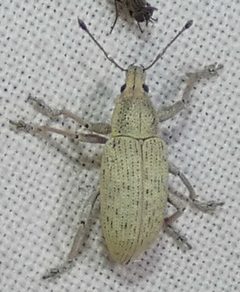
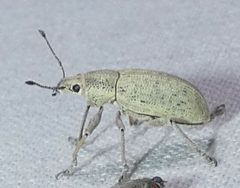
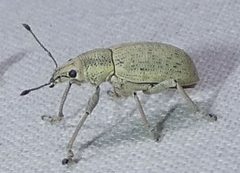
Pachnaeus is a of broad-nosed weevils comprising approximately seven described . Several species, notably P. litus and P. opalus, are economically significant pests of citrus, commonly referred to as citrus root weevils. The genus has been targeted for research, with studies evaluating for management of P. litus .
Pronunciation
How to pronounce Pachnaeus: /ˈpæk.ni.aɪ.əs/
These audio files are automatically generated. While they are not always 100% accurate, they are a good starting point.
Identification
As a member of the tribe Eustylini within the Entiminae, Pachnaeus exhibits the characteristic broad, short rostrum typical of broad-nosed weevils. -level identification requires examination of specific morphological features such as coloration and body markings; for example, P. litus is known as the blue-green citrus root weevil and P. opalus as the northern citrus root weevil.
Images
Habitat
Associated with citrus groves and related agricultural systems. Specific microhabitat preferences for most are not well documented in available sources.
Distribution
Documented from Belize in studies. The likely has broader Neotropical distribution given its citrus pest status, but precise range data for most is limited in provided sources.
Diet
Larvae feed on roots of citrus plants. Specific feeding habits are not detailed in available sources.
Host Associations
- Citrus - larval Root feeding by larvae
Life Cycle
are laid in soil or on plants. Larvae are root-feeding, with development occurring underground. Specific details on and timing are not documented in available sources.
Ecological Role
Pest in citrus agroecosystems. serve as for including Pediobius irregularis, Horismenus bennetti, and Brachyufens osborni, which have been evaluated as agents.
Human Relevance
Economic pest of citrus crops, particularly through larval root damage. Subject of research to reduce dependence in citrus production.
Similar Taxa
- DiaprepesBoth contain citrus root weevil with similar and pest status; frequently compared in studies. Diaprepes abbreviatus is a more extensively studied congeneric pest with overlapping range and associations.
More Details
Biological Control Research
Pachnaeus litus has been specifically targeted in programs, with from the Eulophidae (Pediobius irregularis, Horismenus bennetti) and Trichogrammatidae (Brachyufens osborni) evaluated for their potential to reduce weevil .
Taxonomic Note
The was established by Schönherr in 1826 and currently contains seven described . Two species have widely used reflecting their agricultural importance: P. litus (blue-green citrus root weevil) and P. opalus (northern citrus root weevil).
Sources and further reading
- BugGuide
- Wikipedia
- GBIF taxonomy match
- iNaturalist taxon
- NCBI Taxonomy
- Catalogue of Life
- Comparative suitability of Diaprepes abbreviatus and Pachnaeus litus eggs (Coleoptera: Curculionidae) as hosts for Brachyufens osborni (Hymenoptera: Trichogrammatidae): Implications for their biological control
- EXPLORATION IN BELIZE FOR PARASITOIDS ATTACKING EGGS OF CITRUS WEEVILS, AND AN EVALUATION OF PEDIOBIUS IRREGULARIS AND HORISMENUS BENNETTI (HYMENOPTERA: EULOPHIDAE) AS POTENTIAL BIOLOGICAL CONTROL AGENTS OF DIAPREPES ABBREVIATUS AND PACHNAEUS LITUS (COLEOPTERA: CURCULIONIDAE)