
Pachnaeus opalus
(Olivier, 1807)
Northern Citrus Root Weevil
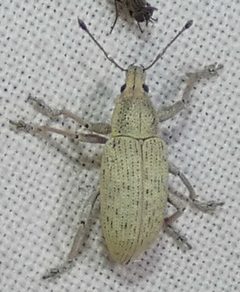
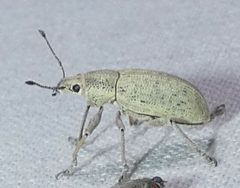
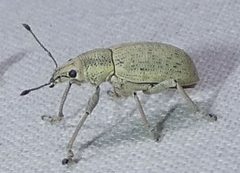
Pachnaeus opalus is a broad-nosed weevil in the Curculionidae, commonly known as the northern citrus root weevil. It is native to the southeastern United States and has been documented in Alabama, Florida, Georgia, Mississippi, and New Jersey. The is associated with citrus and related plants, where feed on foliage and larvae develop in roots. It was first described by Olivier in 1807 as Curculio opalus.
Pronunciation
How to pronounce Pachnaeus opalus: //pækˈniːəs ˈɒpələs//
These audio files are automatically generated. While they are not always 100% accurate, they are a good starting point.
Identification
Distinguished from other Pachnaeus by geographic distribution and subtle morphological characters. Pachnaeus litus (southern citrus root weevil) occurs in overlapping regions; precise identification requires examination of genitalia or other detailed morphological features not specified in available sources.
Images
Habitat
Associated with citrus groves and areas where citrus and related Rutaceae plants grow. are found on plants; larvae occur in soil around root systems.
Distribution
Southeastern United States: documented from Alabama, Florida, Georgia, Mississippi, and New Jersey. The northernmost records in New Jersey suggest range extension or isolated .
Diet
feed on citrus foliage; larvae feed on citrus roots. The specific feeding habits are inferred from the and association, though direct documentation for this is limited.
Host Associations
- Citrus - primary feeding on foliage, larval development in roots
Life Cycle
Complete with , larva, pupa, and stages. Larvae are root-feeders in soil; adults emerge to feed on foliage. Specific timing of life stages is not documented in available sources.
Behavior
Ecological Role
As a root-feeding herbivore, larvae may influence plant vigor and nutrient uptake in citrus. impacts are most significant in agricultural contexts rather than natural .
Human Relevance
Recognized as a pest of citrus in the southeastern United States. Root feeding by larvae and foliar feeding by can reduce tree health and productivity. Management may be required in commercial citrus operations.
Similar Taxa
- Pachnaeus litusSouthern citrus root weevil with overlapping range; distinguished by distribution and subtle morphological differences requiring expert examination
- Pachnaeus citusAnother citrus-associated ; identification requires detailed morphological comparison