
Pachnaeus litus
(Germar, 1824)
blue-green citrus root weevil, blue-green citrus weevil
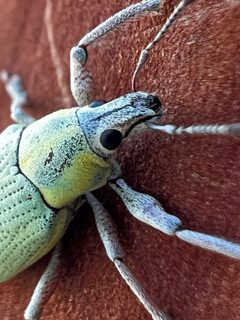
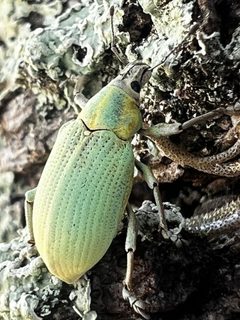
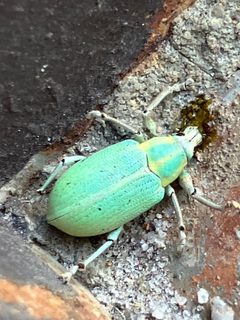
Pachnaeus litus is a broad-nosed weevil in the Curculionidae, commonly known as the blue-green citrus root weevil or blue-green citrus weevil. It is a pest of citrus in North America, with that serve as for multiple . The species has been studied extensively for potential, particularly targeting its egg stage with parasitoids such as Brachyufens osborni (Trichogrammatidae), Pediobius irregularis, and Horismenus bennetti (Eulophidae).
Pronunciation
How to pronounce Pachnaeus litus: /ˈpæknɪəs ˈlaɪtəs/
These audio files are automatically generated. While they are not always 100% accurate, they are a good starting point.
Identification
A broad-nosed weevil distinguished from other Pachnaeus by its blue-green coloration. Specific diagnostic characters for separation from are not documented in available sources.
Images
Habitat
Associated with citrus ; occurs in agricultural settings where citrus is grown.
Distribution
North America; specifically recorded from Florida and Belize. GBIF records indicate presence in Cuba.
Diet
Larval feeding on citrus roots inferred from and association; specific feeding habits not documented in available sources.
Life Cycle
are laid on citrus and are parasitized by multiple including Brachyufens osborni (Trichogrammatidae), Pediobius irregularis, and Horismenus bennetti (Eulophidae). Further details on developmental stages not available.
Ecological Role
Pest of citrus; serves as for that have been evaluated for programs.
Human Relevance
Agricultural pest of citrus subject to research; targeted by as part of strategies.
Similar Taxa
- Diaprepes abbreviatusBoth are citrus-feeding weevils in Curculionidae with overlapping geographic range and shared Brachyufens osborni; distinguished by different coloration and body form.
Sources and further reading
- BugGuide
- Wikipedia
- GBIF taxonomy match
- iNaturalist taxon
- NCBI Taxonomy
- Catalogue of Life
- litus_sutil_triapitsyn_berezovskiy_ht_ucrc_ent_23321_slide0001.jpg | Entomology Research Museum
- Primary Type List | Entomology Research Museum
- Publications | Entomology Research Museum
- Comparative suitability of Diaprepes abbreviatus and Pachnaeus litus eggs (Coleoptera: Curculionidae) as hosts for Brachyufens osborni (Hymenoptera: Trichogrammatidae): Implications for their biological control
- EXPLORATION IN BELIZE FOR PARASITOIDS ATTACKING EGGS OF CITRUS WEEVILS, AND AN EVALUATION OF PEDIOBIUS IRREGULARIS AND HORISMENUS BENNETTI (HYMENOPTERA: EULOPHIDAE) AS POTENTIAL BIOLOGICAL CONTROL AGENTS OF DIAPREPES ABBREVIATUS AND PACHNAEUS LITUS (COLEOPTERA: CURCULIONIDAE)