
Diaprepes
Schönherr, 1823
Diaprepes weevils, citrus root weevils
Species Guides
1- Diaprepes abbreviatus(Diaprepes root weevil)
Diaprepes is a of broad-nosed weevils in the Curculionidae, Entiminae, tribe Eustylini. It belongs to the Exophthalmus genus complex. The genus contains approximately 16 described , with being the most economically significant as a major agricultural pest of citrus and other crops in Florida and the Caribbean. The genus is native to the Caribbean region and has expanded its range to include parts of Central America and the southeastern United States.
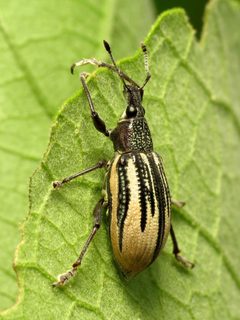
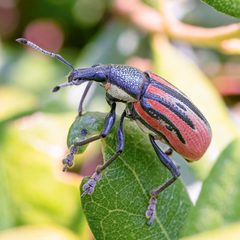
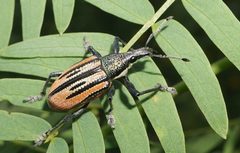
Pronunciation
How to pronounce Diaprepes: //daɪəˈpriːpiːz//
These audio files are automatically generated. While they are not always 100% accurate, they are a good starting point.
Images
Distribution
Caribbean islands including Trinidad, Antigua, Barbados, Cuba, Dominica, Guadeloupe, Haiti, Hispaniola, Martinique, Mona, Montserrat, Nevis, Puerto Rico, St. Barthelemy, St. Croix, St. Kitts, St. Lucia, St. Thomas, St. Vincent, and Vieques; Central America (Honduras, Nicaragua, Venezuela); and southeastern United States (Florida).
Host Associations
- Citrus - primary for D. abbreviatus, major agricultural pest
- Cassava - documented for D. abbreviatus
- Maize - documented for D. abbreviatus
- Sugarcane - documented for D. abbreviatus
Human Relevance
, the citrus root weevil, is a significant agricultural pest causing extensive economic damage to citrus and other crops in Florida. First reported in Florida in 1964, it has been the subject of programs and efforts. The has been highlighted in agricultural extension materials as a key pest requiring monitoring and management.
Similar Taxa
- ExophthalmusBoth belong to the same genus complex (Exophthalmus complex) within tribe Eustylini, sharing broad-nosed weevil and Caribbean distribution patterns.
- PachnaeusAnother of broad-nosed weevils in tribe Eustylini with similar and agricultural pest status in Florida; both include citrus-feeding .
More Details
Taxonomic History
The was established by Schönherr in 1823. It has been variously classified within the broad-nosed weevil Entiminae, with current placement in tribe Eustylini based on morphological and molecular evidence.
Species Diversity
The includes 16 described : D. abbreviatus, D. balloui, D. boxi, D. comma, D. doublierii, D. excavatus, D. famelicus, D. glaucus, D. marginatus, D. maugei, D. reticulatus, D. revestitus, D. rohrii, D. rufescens, D. sommeri, and D. variegatus.
Sources and further reading
- BugGuide
- Wikipedia
- GBIF taxonomy match
- iNaturalist taxon
- NCBI Taxonomy
- Catalogue of Life
- The 13 Bugs of Christmas | Bug Squad
- On the First Day of Christmas... | Bug Squad
- Revisiting 'The 13 Bugs of Christmas' | Bug Squad
- A Buggy Kind of Christmas: A Poem Revisited | Bug Squad
- A Bugworthy Kind of Christmas | Bug Squad
- 'The 13 Bugs of Christmas'--Revisited | Bug Squad
- Diaprepes Root Weevil, Diaprepes abbreviatus (Linnaeus) (Insecta: Coleoptera: Curculionidae)
- Diaprepes abbreviatus . [Distribution map].
- Citrus Pest Quick Guide: Diaprepes Root Weevil
- Flight Behavior and Dispersal of Diaprepes abbreviatus
- Attraction, Mating, and Oviposition Behavior in Field Populations of Diaprepes abbreviatus1 on Citrus
- Diaprepes abbreviatus (Coleoptera: Curculionidae): Host Plant Associations
- Biology of Diaprepes abbreviatus (Coleoptera: Curculionidae) Reared on an Artificial Diet
- Weedy Hosts of the Diaprepes Root Weevil in Florida Sugarcane
- Gut microbial community structure of the adult citrus root weevil Diaprepes abbreviatus.