
Bembidiini
Stephens, 1827
Tribe Guides
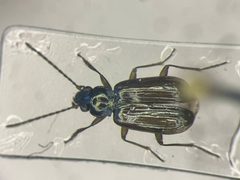
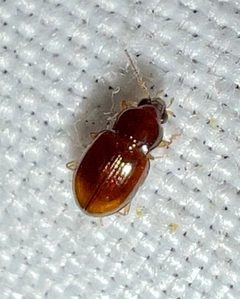
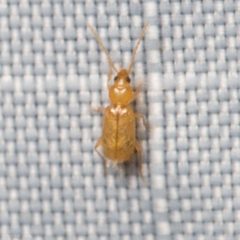
4Bembidiini is a large tribe of ground beetles (Carabidae) comprising over 120 and approximately 3,100 described . Members are predominantly small to minute beetles, often found in riparian, intertidal, subterranean, and arboreal . The tribe includes notable subtribes such as Xystosomina (arboreal tropical beetles) and Anillina (small litter-dwelling forms), as well as the subtribe Lovriciina containing highly specialized cave-dwelling species. Many species exhibit narrow habitat specificity, including intertidal gravel beaches and tropical forest systems.
Pronunciation
How to pronounce Bembidiini: /bɛmˈbɪdiːˌaɪnaɪ/
These audio files are automatically generated. While they are not always 100% accurate, they are a good starting point.
Identification
Bembidiini are generally small (1–5 mm), with slender to moderately robust bodies. Diagnostic tribal characters include specific arrangements of elytral , detailed male genitalic structures, and particular configurations of the prosternal process. The subtribe Anillina contains eyeless or nearly eyeless species with reduced wings. Subtribe Xystosomina (arboreal forms) exhibits specialized tarsal structures adapted for climbing vegetation. Cave-dwelling Lovriciina species are completely blind, depigmented, and extremely small (1.8–2.2 mm). Species-level identification typically requires examination of male genitalia and female spermathecae.
Images
Habitat
span riparian zones, intertidal beaches, forest litter, subterranean caves, and tropical forest . Riparian occupy sandy, silty, or gravelly substrates near water. The intertidal Bembidion (Lymnaeum) nigropiceum inhabits coarse gravel mounds at the high-tide line. Arboreal members of subtribe Xystosomina occur in tropical forest canopies in the Amazon Basin, northern Andes, and tropical Australia. Cave-dwelling Lovriciina species occupy deep cave systems in karst regions. Forest litter species occur in mesic hardwood and coniferous forests.
Distribution
distribution with major radiations in the Holarctic, Neotropics, and Australasia. Xystosomina is distributed from Guerrero, México to Aguas Blancas, Argentina, with highest diversity in the Amazon Basin and a significant radiation in the northern Andes. Lovriciina occurs disjunctly in the Dinaric Alps (Croatia) and Rhodopi Mountains (Bulgaria). Pelodiaetodes is to New Zealand. Anillinus groups occur in the southern Appalachian Mountains of the United States. The tribe is present across Europe, Asia, North America, and introduced occur in some regions (e.g., European Bembidion nigropiceum in Massachusetts).
Behavior
Riparian exhibit humidity-seeking correlated with type: species in exposed sandy habitats show initial hygronegative responses, while those in shaded, vegetated, or gravel/stone habitats are indifferent or hygropositive. Some species switch from hygronegative to hygropositive after losing 8–9% body water weight. Intertidal species remain submerged during high tide. Cave-dwelling species are exclusively subterranean with no surface activity. Arboreal species are active in forest systems. Many species are flightless, particularly cave and intertidal forms, limiting capacity.
Ecological Role
Riparian and intertidal likely function as or scavengers of small in moist microhabitats. Intertidal Bembidion nigropiceum may process marine organic matter trapped in gravel substrates. Arboreal Xystosomina species occupy tropical forest . Forest litter species contribute to invertebrate structure in decomposition systems. Specific functions remain largely unquantified for most species.
Human Relevance
Some serve as indicators of integrity in riparian and wetland systems. The rediscovery of Bembidion nigropiceum in Massachusetts after 110 years demonstrates value for historical and invasion studies. Cave-dwelling Lovriciina species inform paleogeographic and biogeographic research on Balkan mountain isolation. No significant agricultural or economic impacts documented.
Similar Taxa
- TrechiniAlso in Trechinae; distinguished by different elytral chaetotaxy and typically larger body size with more prominent in surface-dwelling forms.
- PogoniniAnother tribe in Trechinae; characterized by dense on and legs, and typically more robust , versus generally glabrous or sparsely setose Bembidiini.
- CarabiniLarger, more robust ground beetles in Carabinae; distinguished by prominent elytral intervals and typically larger size (often >10 mm) versus minute to small Bembidiini.
More Details
Taxonomic Complexity
Bembidiini classification has undergone substantial revision, with recent phylogenetic analyses prompting reorganization of subtribal boundaries. The Xystosomina subtribe was formally established based on structural character reanalysis, and the position of this group within Bembidiini required adjustment of broader tribal classification.
Conservation Significance
Cave-dwelling Lovriciina are extremely rare and known from very few specimens, highlighting conservation concerns for obligate subterranean fauna. The disjunct distribution of this subtribe between the Dinarides and Rhodopes reflects ancient vicariance events dating to the Early Miocene.
Water Balance Physiology
Riparian Bembidiini generally have poor desiccation resistance compared to other carabid beetles, with survival time under dry conditions being relatively short. Water gain occurs primarily through drinking and food rather than atmospheric absorption.
Sources and further reading
- BugGuide
- Wikipedia
- iNaturalist taxon
- NCBI Taxonomy
- Catalogue of Life
- Uncategorized | Blog - Part 55
- Separated for 20 million years: Blind beetle from Bulgarian caves clarifies questions | Blog
- Review of the species of Pelodiaetodes Moore (Coleoptera: Carabidae: Bembidiini: Anillina) of New Zealand
- Rediscovery of Bembidion (Lymnaeum) nigropiceum (Marsham) (= puritanum Hayward) in Massachusetts, with remarks on biology and habitat (Coleoptera, Carabidae, Bembidiini)
- SYSTEMATIC, SYNONYMIC AND GEOGRAPHIC NOTES ON BEMBIDION (TERMINOPHANES) PULCHERRIMUM (MOTSCHULSKY, 1850) AND ITS CLOSEST RELATIVES (COLEOPTERA: CARABIDAE: BEMBIDIINI)
- Humidity responses and water balance of riparian species of Bembidiini (Col., Carabidae)
- New species of Anillinus Casey (Carabidae: Trechinae: Bembidiini) from the Southern Appalachians and phylogeography of the A. loweae species group
- ARBOREAL BEETLES OF TROPICAL FORESTS: THE XYSTOSOMI GROUP, SUBTRIBE XYSTOSOMINA (COLEOPTERA: CARABIDAE: BEMBIDIINI). PART I. CHARACTER ANALYSIS, TAXONOMY, AND DISTRIBUTION