
Bembidion
Latreille, 1802
Species Guides
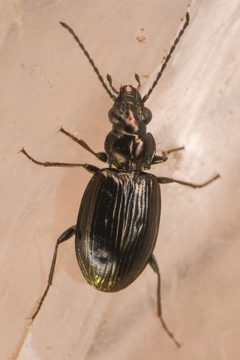
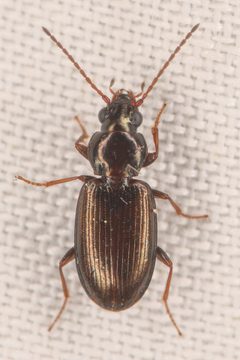
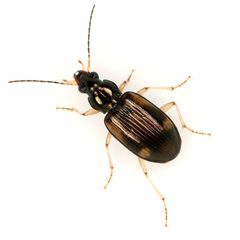
186Bembidion is the largest of ground beetles in the Carabidae by number of . All species are small, measuring less than 7.5 mm, and are characterized by rapid movement. The genus exhibits a biantitropical distribution pattern, occurring in temperate regions of both the Northern and Southern Hemispheres but absent from tropical zones. Taxonomic subdivision of the genus remains unresolved, with multiple attempts to split it into smaller genera failing to achieve general acceptance.
Pronunciation
How to pronounce Bembidion: /bɛmˈbɪdiɒn/
These audio files are automatically generated. While they are not always 100% accurate, they are a good starting point.
Identification
Identification to level requires examination of fine morphological details, particularly of the prothorax, which shows substantial variation between species. The as a whole is distinguished from similar ground beetle genera by its small size, rapid movement, and association with riparian . In warmer regions, Bembidion is replaced by the closely related genus Tachys and other genera. Subgeneric classifications exist but lack universal acceptance.
Images
Appearance
Small beetles, all measuring less than 7.5 mm in length. Body form is typical of ground beetles with elongated, somewhat flattened bodies. Many species exhibit metallic coloration, including green and gold iridescence visible under magnification. Specific morphological features vary considerably across the due to its large size and taxonomic complexity.
Habitat
Most live in close proximity to water, including stream margins, riverbanks, lake shores, and other riparian environments. Some species occupy that periodically flood and then evaporate, such as the edges of seasonal pools and creeks. Specific habitat requirements vary by species.
Distribution
Biantitropical distribution: present in temperate regions of both the Northern and Southern Hemispheres, absent from tropical zones. Documented from North America (including Vermont), Scandinavia (Denmark, Norway, Sweden), and other temperate regions. Distribution records indicate presence across multiple continents in suitable temperate .
Behavior
All move very fast, an that likely aids in foraging and avoidance in exposed riparian . Specific behavioral details vary considerably across the hundreds of species in the .
Ecological Role
Ground beetles in the Carabidae function as of other insects. Bembidion contribute to this predatory role in riparian and wetland . Their sensitivity to disturbance makes them potential bioindicators of environmental conditions, though this has been more explicitly documented for carabid beetles generally than for Bembidion specifically.
Human Relevance
Bembidion are subjects of taxonomic and biodiversity research due to the 's exceptional . The rediscovery of Bembidion brownorum in California after 55 years illustrates how poorly documented insect diversity can be, even in well-studied regions. Some species have been observed in agricultural settings, with Bembidion quadrimaculatum oppositium and Bembidion rapidum documented in strip-tilled farm fields.
Similar Taxa
- TachysClosely related that substitutes for Bembidion in warmer tropical and subtropical regions. Similar in size and ecological role but distinguished by distribution patterns.
- Other Bembidiini generaMultiple related within the tribe Bembidiini share morphological similarities; precise distinction requires examination of specific structural characters.
More Details
Taxonomic Complexity
Bembidion has resisted subdivision into smaller despite multiple attempts, most notably by René Jeannel (1941) and G.G. Perrault (1981). The genus contains numerous subgenera, some of which various authors have elevated to full genus rank, but no universally accepted classification exists.
Conservation Significance
The case of Bembidion brownorum, rediscovered in California after 55 years, highlights that even in well-known can escape detection for decades. Historical specimens from the 1920s-1960s indicate former widespread distribution in the Central Valley and Los Angeles Basin, with apparent collapse following urbanization and agricultural development.