
Bembidiina
Stephens, 1827
Genus Guides
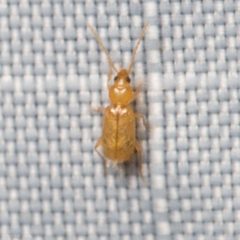
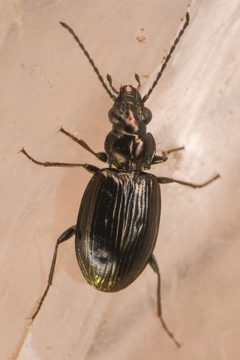
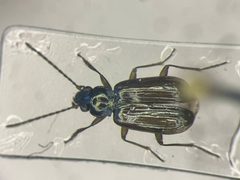
5A large subtribe of ground beetles (Carabidae) comprising over 120 and more than 3,100 described . Members are generally small to minute beetles with diverse morphologies across numerous subgenera. The subtribe has a distribution with major centers of diversity in the Palaearctic and Afrotropical regions. Taxonomic revisions continue to refine species boundaries, synonymies, and subgeneric placements based on male genitalia and elytral microsculpture.
Pronunciation
How to pronounce Bembidiina: /bɛmˈbɪdiˌina/
These audio files are automatically generated. While they are not always 100% accurate, they are a good starting point.
Identification
Identification relies heavily on male genitalia () structure and elytral microsculpture patterns. The Sinechostictus group is characterized by: deep 8 sometimes incomplete anteriorly and positioned close to the elytral marginal edge; rounded basal edge not prolonged obliquely inward; setae present on stria 3; metasternal (between mesocoxae) never bordered; copulatory pieces strongly sclerified and lacking a "squamiferous packet"; aedeagus base with two subequal lobes framing the basal opening. within subgenus Neja with not microsculptured or with microsculpture restricted only at the extreme elytral apex can be distinguished using specialized keys.
Images
Distribution
. Palaearctic region: with records from Syria, Montenegro, Afghanistan, Iraq, Turkey, Tajikistan, Greece, Poland, and Kazakhstan. Afrotropical region: including Ethiopia with multiple . France: comprehensive fauna documented through identification keys. Anatolo-Caucasian-Turanian region: including Iran, Azerbaijan, and Iraq.
Sources and further reading
- BugGuide
- iNaturalist taxon
- Catalogue of Life
- Geographic and taxonomic notes, addenda and corrigenda on the subtribe Bembidiina Stephens, 1827 of the 2017 ‘Catalogue of Palaearctic Coleoptera’ (Coleoptera, Carabidae, Bembidiina)
- Les Bembidiina de la faune de France. Clés d'identification commentées (ColéoptèresCarabidae Trechinae) (quatrième et dernière partie)
- Bembidiina of Afrotropical Region: 3. <em>Bembidion</em> subgenus <em>Peryphus</em> Dejean, 1821 and related subgenera (Coleoptera, Carabidae)
- Notes on taxonomy and geography of Bembidion (Neja ) leucoscelis Chaudoir and Bembidion (Neja ) curtulum Duval (Coleoptera: Carabidae: Bembidiina)
- Notes on genus <em>Bembidion</em>, subgenus <em>Peryphanes</em>, from “Anatolo-Caucasian-Turanian” region with description of two new taxa from Iran (Coleoptera: Carabidae: Bembidiina)