
Lionepha
Casey, 1918
Species Guides
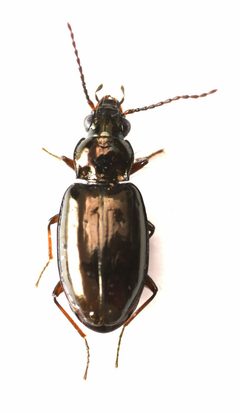
7Lionepha is a of ground beetles (Carabidae) comprising 11 described found in western North America. The genus was established by Casey in 1918 and remained poorly understood until recent integrative taxonomic work combining molecular and morphological data resolved species boundaries. Lionepha species were historically confused with Bembidion due to convergent , but genetic analyses confirm they represent a distinct lineage. The genus includes two species groups: the L. erasa group and the L. osculans group.
Pronunciation
How to pronounce Lionepha: /liːoʊˈnɛfə/
These audio files are automatically generated. While they are not always 100% accurate, they are a good starting point.
Identification
Lionepha are morphologically similar to Bembidion and were long classified within that . Accurate identification requires examination of male genitalia and genetic data; eight-gene phylogenetic analysis has been used to distinguish cryptic species. The genus can be separated from Bembidion by genetic distinctiveness despite convergent external . Species-level identification relies on diagnostic characters provided in recent taxonomic revisions, including illustrations and distribution maps.
Images
Distribution
Western North America, ranging from Alaska south to southern California and east to Colorado.
Life Cycle
All examined have 12 pairs of and an X0/XX sex- system.
Human Relevance
Recent taxonomic revisions provide identification tools including illustrations, , and distribution maps for specimens. The has been used as a case study for integrating classical with skimming and delimitation methods.
Similar Taxa
Misconceptions
The common and widespread previously known as Lionepha erasa was misidentified; the name L. erasa actually belongs to a relatively rare western species ranging from Oregon through Alaska, while the common species now takes the name L. probata.
More Details
Taxonomic History
Many were transferred from Bembidion to Lionepha based on genetic evidence. The was revised in 2020 using eight-gene species delimitation analyses, classical , and skimming of including a LeConte lectotype from the 1850s.
Species Groups
The 11 described are divided into two groups: the L. erasa group (7 species) and the L. osculans group (4 species). Four species were described as new in 2020: L. australerasa, L. kavanaughi, L. lindrothi, and L. tuulukwa.