
Cibolacris parviceps
(Walker, 1870)
Cream Grasshopper
Species Guides
2- Cibolacris parviceps californica
- Cibolacris parviceps parviceps(cream grasshopper)
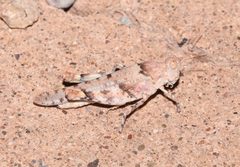
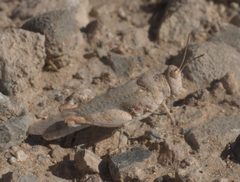
Cibolacris parviceps, commonly known as the cream , is a small grasshopper in the Acrididae. It inhabits arid and semi-arid environments of the southwestern United States and adjacent Mexico. The species is notable for its cryptic, stone-like coloration that provides effective camouflage in desert . It overwinters as nymphs rather than , an uncommon trait among North .
Pronunciation
How to pronounce Cibolacris parviceps: /sɪˌboʊləˈkrɪs pɑrˈvɪsɛps/
These audio files are automatically generated. While they are not always 100% accurate, they are a good starting point.
Identification
Distinguished from band-winged grasshoppers ( Oedipodinae) by its placement in Gomphocerinae, though this distinction may require examination of shape and other subtle morphological features. The cream to gray coloration and small size separate it from larger, more colorful desert grasshoppers such as Trimerotropis pallidipennis, which has conspicuous black-banded pale hindwings. The lacks the bright hindwing patterns typical of Oedipodinae. Similar in size to Psoloessa texana, but P. texana exhibits complex linear and diamond-shaped patterns on the body and is more strongly associated with plant debris.
Images
Habitat
Occupies arid and semi-arid environments including dry desert washes (arroyos), overgrazed rangeland, and disturbed open ground such as unpaved parking lots. Found in desolate, sparsely vegetated with exposed mineral soil and rock substrates.
Distribution
Southwestern United States (Arizona, California, New Mexico) and adjacent Mexico (northeastern and northwestern regions). Ranges throughout the desert Southwest.
Seasonality
Active during warmer months. Overwinters as nymphs, with present in spring and summer. Unlike most North that overwinter as , this passes winter in the nymphal stage.
Diet
Graminivorous; feeds primarily on grasses. Specific plant records are limited.
Life Cycle
Development includes , nymph, and stages. Unusual among grasshoppers for as nymphs rather than eggs. Nymphs undergo approximately five to six instars before reaching adulthood. Adults appear following the final and may persist until first severe frost.
Behavior
Exhibits strong cryptic , remaining motionless when approached and relying on camouflage for avoidance. are capable of but typically fly short distances before settling again. Nymphs move by hopping. Confident in its camouflage, allowing close approach by observers.
Ecological Role
Primary consumer in desert , converting plant to animal tissue. Serves as prey for various desert including birds, lizards, spiders, and predatory insects. Contributes to nutrient cycling in arid through herbivory and as a food source for higher .
Human Relevance
No significant economic impact; not considered an agricultural pest. may increase temporarily in disturbed such as overgrazed rangeland or urban vacant lots. Of interest to entomologists and naturalists for its remarkable camouflage and unusual .
Similar Taxa
- Trimerotropis pallidipennisLarger (31-42 mm) band-winged grasshopper with conspicuous pale hindwings bearing broad black band; more abundant and widespread in same region
- Psoloessa texanaSimilar small size (16-22 mm) and Gomphocerinae affiliation, but distinguished by complex linear and diamond body patterns and stronger association with plant debris
- Lactista aztecusSimilar small size (19-25 mm) and desert , but has yellow hindwings with black band and single bar across forewing matched by bar on hind
Misconceptions
Historically classified in Oedipodinae (band-winged grasshoppers) by early taxonomists; currently placed in Gomphocerinae (slant-faced grasshoppers), though the morphological basis for this reassignment is not immediately obvious from external appearance.
More Details
Nymphal overwintering
One of relatively few North American grasshopper known to overwinter as nymphs rather than , joining species such as Arphia conspersa, Chortophaga viridifasciata, and Eritettix simplex in this uncommon strategy.
Taxonomic history
Originally described as Oedipoda parviceps by Walker in 1870. The Cibolacris was formerly placed in Oedipodinae but is now classified in Gomphocerinae, tribe Cibolacrini.