
Cibolacris
Hebard, 1937
Species Guides
2- Cibolacris parviceps(Cream Grasshopper)
- Cibolacris samalayucae(Samalayuca Dune Grasshopper)
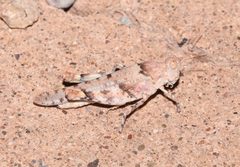
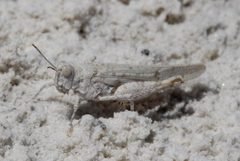
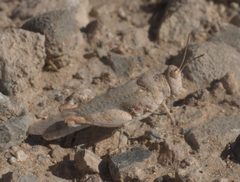
Cibolacris is a of slant-faced grasshoppers in the Acrididae, established by Hebard in 1937. The genus contains at least four described distributed across the southwestern United States and northern Mexico. Members of this genus are characterized by a disproportionately small and weak or absent and lateral carinae on the pronotum. Cibolacris parviceps, commonly known as the cream grasshopper, is the most frequently referenced species and has been documented as nymphs rather than .
Pronunciation
How to pronounce Cibolacris: /sɪˌboʊləˈkrɪs/
These audio files are automatically generated. While they are not always 100% accurate, they are a good starting point.
Identification
Cibolacris can be distinguished from other Gomphocerinae by their disproportionately small and weak or absent and lateral carinae on the pronotum. In the key to Gomphocerinae, Cibolacris parviceps is separated from similar such as Aulocara by these pronotal characteristics. The tegmina and wing venation patterns also serve as diagnostic features when compared to related slant-faced grasshoppers.
Images
Distribution
Southwestern United States (Arizona, California, New Mexico) and northern Mexico (Northeast and Northwest regions).
Life Cycle
At least one , Cibolacris parviceps, overwinters in the nymphal stage rather than as . This represents an exception to the more common pattern of egg .
Similar Taxa
- AulocaraSimilar slant-faced grasshoppers in Gomphocerinae, but distinguished by having a disproportionately large and distinct carina on the pronotum in Aulocara, versus small head and weak carinae in Cibolacris.
More Details
Taxonomic History
The was established by Hebard in 1937 and placed in tribe Cibolacrini within Gomphocerinae. The type and exact circumscription have been refined through subsequent taxonomic work on North American Acrididae.