
Epiblema
Hübner, [1825], 1816
Species Guides
33- Epiblema abruptana(Abrupt Epiblema Moth)
- Epiblema benignata(Benign Borer)
- Epiblema boxcana
- Epiblema brightonana(Brighton's Epiblema Moth)
- Epiblema browni
- Epiblema carolinana
- Epiblema chromata
- Epiblema coracinana
- Epiblema desertana
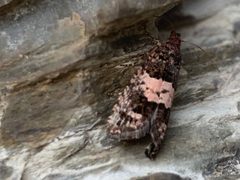
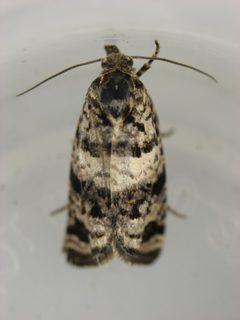
Epiblema is a of tortricid moths in the tribe Eucosmini, with approximately 100 described distributed primarily in the Holarctic region. Several species have been extensively studied for their ecological interactions, including relationships and cryoprotective adaptations for . Some species, notably E. strenuana (ragweed borer) and E. minutana, have been investigated as agents for Asteraceae weeds, though taxonomic revisions have clarified their distinct status. The genus exhibits diverse larval feeding habits, with some species boring into plant stems or forming galls.

Pronunciation
How to pronounce Epiblema: /ɛˈpɪblɛmə/
These audio files are automatically generated. While they are not always 100% accurate, they are a good starting point.
Identification
-level identification within Epiblema typically requires examination of genitalia , particularly the shape of the female sterigma and male valvae. using COI sequences has proven effective for distinguishing cryptic species, as demonstrated in the separation of E. strenuana from E. minutana. Wing coloration patterns vary among species and can provide initial diagnostic guidance, though individual variation necessitates confirmatory examination. The is distinguished from related tortricid genera by combinations of wing venation, genitalic structures, and larval habits.
Images
Habitat
occupy diverse including forests, grasslands, and agricultural areas. Larvae of many species are associated with herbaceous plants and woody vegetation, with specific microhabitat requirements varying by association. larvae occur in soil litter, within plant galls, or in stem boring tunnels depending on species.
Distribution
Holarctic distribution with greatest diversity in North America and Eurasia. Individual ranges vary: E. strenuana occurs in Australia and China (introduced or native range unclear in some regions), E. minutana has been documented in Israel, and E. scudderiana is found in North America where it overwinters in galls on goldenrod.
Seasonality
periods vary by and latitude, generally occurring during warmer months. Many species exhibit with larval . E. scudderiana larvae overwinter in a freeze-avoiding state, showing seasonal metabolic adjustments in activity profiles correlated with cryoprotectant glycerol synthesis and clearance.
Diet
Larval feeding habits are -specific and include stem boring, gall formation, and leaf or root feeding. E. strenuana larvae feed internally on Asteraceae including Ambrosia and Parthenium species, causing gall formation. E. scudderiana larvae feed within galls on goldenrod (Solidago). Specific host associations remain undocumented for many species.
Life Cycle
Complete with , larva, pupa, and stages. Larval development includes multiple instars; some overwinter as mature larvae in . E. scudderiana exhibits freeze-avoiding physiology with glycerol accumulation. may occur within feeding tunnels, galls, or in soil. Adult timing varies by species and environmental conditions.
Behavior
are and attracted to light. Larval includes stem boring, gall induction, and concealed feeding within plant tissues. Some exhibit startle defense responses as adults. E. tripartitana has been observed with camouflage coloration resembling bird droppings. Larvae of some species show differential susceptibility to environmental stressors when parasitized.
Ecological Role
Herbivores that can act as regulators of their plants. Some serve as hosts for including Lissonota dubia (Ichneumonidae) and Apanteles tedellae (Braconidae), with inducing measurable physiological changes in host larvae including growth inhibition and altered cuticular properties. Proposed and used as agents for weeds, though non-target host concerns have limited implementation.
Human Relevance
Several investigated for of weeds, particularly Parthenium hysterophorus and Ambrosia species. E. strenuana was released in Australia and China for ragweed control but deprioritized in South Africa due to range concerns threatening Guizotia abyssinica (niger seed) . Taxonomic confusion between E. strenuana and E. minutana has complicated biocontrol implementation. No significant economic importance as pests.
Similar Taxa
- EpinotiaHistorically congeneric with some Epiblema ; E. tedella was formerly placed in Epinotia. Separation based on genitalic and larval morphological differences.
- HystrichophoraSimilar tortricid moths in tribe Eucosmini; distinguished by wing pattern and genitalic structure.
- EucosmaRelated in tribe Eucosmini with similar overall appearance; requires genitalic examination for definitive separation.
More Details
Parasitoid Interactions
E. tedella serves as a model organism for studying physiological effects of . Endoparasitoids Lissonota dubia and Apanteles tedellae induce distinct effects: Apanteles causes stronger growth inhibition, earlier mortality under wet conditions, and greater suppression of wing development (90% reduction vs. 67% for Lissonota). These effects result from -induced changes in metabolism and structure rather than direct tissue destruction.
Cryoprotective Physiology
E. scudderiana has been extensively studied for freeze-avoiding strategies. Larvae synthesize glycerol as a cryoprotectant through multiple enzymatic including glyceraldehyde phosphatase/NADPH-linked polyol dehydrogenase and glycerol-3-phosphate dehydrogenase/glycerol-3-phosphatase routes. Seasonal activity profiles reflect dynamic metabolic adjustments for cryoprotectant accumulation in autumn and clearance in spring.
Taxonomic Revision
Recent molecular and morphological work (2019) elevated E. minutana from synonymy with E. strenuana, establishing both as valid . This revision has significant implications for programs, as range data attributed to E. strenuana may partly apply to E. minutana, whose host preferences remain uncharacterized.
Sources and further reading
- BugGuide
- Wikipedia
- iNaturalist taxon
- NCBI Taxonomy
- Catalogue of Life
- Bug Eric: National Moth Week Recap for Colorado Springs
- Host range tests cast doubt on the suitability of Epiblema strenuana as a biological control agent for Parthenium hysterophorus in Africa
- Taxonomic issues related to biological control prospects for the ragweed borer, Epiblema strenuana (Lepidoptera: Tortricidae)
- über parasitär bedingte, differenzierte Mortalität bei überwinternden Larven von Epiblema tedella Cl. (Lep., Tortricidae)1
- Eine parasitär bedingte Entwicklungshemmung der Flügelimaginalscheiben in den Larven von Epiblema tedella Cl. (Lep., Tortricidae)1
- Parasitär bedingte Wachstumshemmung bei den Larven von Epinotia (= Epiblema) tedella Cl. (Lep., Tortricidae)1
- Enzyme activity profiles in an overwintering population of freeze-avoiding gall moth larvae, Epiblema scudderiana