
Hystrichophora
Walsingham, 1879
Species Guides
5- Hystrichophora loricana(Coppery Orbexilum)
- Hystrichophora ochreicostana
- Hystrichophora stygiana
- Hystrichophora taleana(indigobush twig borer)
- Hystrichophora vestaliana
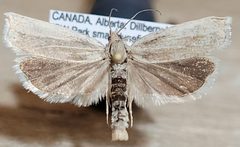
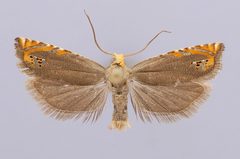
Hystrichophora is a of small in the Tortricidae, first described by Walsingham in 1879. These moths belong to the Olethreutinae and tribe Enarmoniini. Members of this genus are leafroller moths, with larvae that roll or tie leaves to create shelters. The genus is part of the diverse Tortricidae family, which contains many economically significant agricultural pests.

Pronunciation
How to pronounce Hystrichophora: //hɪˌstrɪkoʊˈfɔːrə//
These audio files are automatically generated. While they are not always 100% accurate, they are a good starting point.
Identification
Identification to requires examination of genitalia and other microscopic features. The genus is difficult to distinguish from related olethreutine genera without specialized taxonomic expertise. Specimens from Colorado have been tentatively identified based on general olethreutine .
Images
Habitat
Specific preferences for the are not well documented. As with many tortricid moths, likely associated with woody or herbaceous vegetation where larval plants occur.
Distribution
Records exist from North America, including Colorado. The has been observed in prairie with cottonwood groves and nearby wetlands in El Paso County, Colorado. Broader distribution details require additional sources.
Seasonality
have been observed in July in Colorado, coinciding with National Week events. Specific period limits are not established.
Life Cycle
Larvae are leafrollers that construct shelters by rolling or tying leaves, consistent with Tortricidae. Specific details on number of instars, stage, and sites are not documented.
Behavior
are and attracted to light. Larval of leaf-rolling serves as protection from and .
Ecological Role
Larvae function as herbivores on their plants. Specific ecological impacts are not documented. may serve as prey for and as hosts for .
Human Relevance
No documented economic significance. The is primarily of interest to lepidopterists and biodiversity researchers.
Similar Taxa
More Details
Taxonomic note
The spelling 'Hystrichophora' is used in modern sources (iNaturalist, Catalogue of Life, NCBI), though 'Hystricophora' appears in some older references. The was established by Walsingham in 1879.
Observation context
A specimen photographed at Chico Basin Ranch, Colorado in July 2017 was tentatively identified as 'probably another tortricid , in the Hystrichophora' by an experienced observer, indicating the challenges of field identification.