
Epiblema strenuana
(Walker, 1863)
ragweed borer, stem-galling moth
Epiblema strenuana is a tortricid native to North America that has been widely introduced as a agent against Asteraceae weeds. Its larvae form stem galls on plants, functioning as nutrient sinks that place the plant under metabolic stress. The has established in Australia and China, but was rejected for release in India and South Africa due to non-target risks to the oil-seed crop Guizotia abyssinica. Taxonomic confusion with the closely related E. minutana has complicated host range assessments.
Pronunciation
How to pronounce Epiblema strenuana: /ˌɛpɪˈbliːmə strɛˈnjuːənə/
These audio files are automatically generated. While they are not always 100% accurate, they are a good starting point.
Identification
Distinguished from E. minutana by wing coloration, shape of the female sterigma, and COI barcodes. previously identified as E. strenuana in Israel have been determined to be E. minutana. are small tortricid moths; larvae are stem-borers forming galls.
Images
Appearance
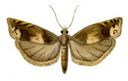
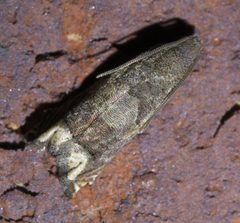
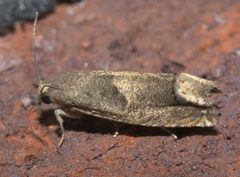
includes wing coloration patterns that distinguish it from E. minutana; female sterigma shape is a diagnostic character. Specific coloration details not provided in sources.
Habitat
Associated with plants in the Asteraceae, particularly in disturbed and agricultural settings where weeds occur. In Australia, found in parthenium weed in north Queensland.
Distribution
Native to North America (Mexico and United States). Introduced to Australia (1982) and China for . Under testing in South Africa (2010, rejected 2012). Rejected for release in India.
Seasonality
In Australia, levels by Bracon sp. vary seasonally: low (6.5–8.2%) at the beginning of the parthenium-growing season, peaking (49–53%) at the end of the season. Gall formation most damaging when initiated at the rosette stage of plant development.
Diet
Herbivore; larvae feed internally on plant stems, forming galls that function as nutrient sinks.
Host Associations
- Parthenium hysterophorus - primary target Main target in Australia; stem-galling causes metabolic stress to plant
- Ambrosia artemisiifolia - target target
- Xanthium occidentale - target target
- Xanthium spinosum - target target
- Ambrosia trifida - target target
- Guizotia abyssinica - non-risk Oil-seed crop; complete larval development observed in India, limited development in South African testing under no-choice conditions; primary reason for rejection as biocontrol agent in Africa
Life Cycle
Larvae develop within stem galls on plants. occurs within the gall. Subject to by native insects during larval and pupal stages in introduced range. In Australia, parasitism by Bracon sp. reached 22.9% by 1998–99, up from 2.6% in 1986–87.
Behavior
Forms stem galls by intercepting normal transport mechanisms of plants, draining nutrients and metabolic products. Gall formation most effective when initiated at host plant rosette stage. Strong ability and broad host acceptance across several Asteraceae .
Ecological Role
agent for Asteraceae weeds; serves as for native insects (Antrocephalus sp., Bracon sp.) in introduced range, which may compromise effectiveness.
Human Relevance
Used in programs in Australia and China to manage parthenium weed and other ragweeds. Rejected for release in India and South Africa due to risk to Guizotia abyssinica, an important oil-seed crop in East Africa. Subject of taxonomic revision due to confusion with E. minutana.
Similar Taxa
- Epiblema minutanaFormerly synonymized with E. strenuana but raised to valid status based on wing coloration, female sterigma shape, and COI barcodes; in Israel previously identified as E. strenuana are actually E. minutana; potentially has different feeding habits and damages different plant parts
Misconceptions
Historically confused with E. minutana, leading to misidentification of and uncertain range records. Many literature records of host associations may refer to E. minutana rather than true E. strenuana.
More Details
Taxonomic clarification
A 2019 study determined that E. minutana (Kearfott, 1905) is a valid distinct from E. strenuana, raising it from synonymy. This has significant implications for history, as the range of true E. strenuana is based on released in Australia and China, while the host range of E. minutana remains unclarified.
Parasitoid impact
In Australia, native Bracon sp. increased substantially over 16 years (from 2.6% to 22.9%), but remains low early in the growing season when galling is most damaging to weeds, suggesting limited impact on efficacy.
Sources and further reading
- BugGuide
- GBIF taxonomy match
- iNaturalist taxon
- NCBI Taxonomy
- Catalogue of Life
- Bug Eric: National Moth Week Recap for Colorado Springs
- Taxonomic issues related to biological control prospects for the ragweed borer, Epiblema strenuana (Lepidoptera: Tortricidae)
- Host range tests cast doubt on the suitability of Epiblema strenuana as a biological control agent for Parthenium hysterophorus in Africa
- Larval parasitism by native insects on the introduced stem‐galling moth Epiblema strenuana Walker (Lepidoptera: Tortricidae) and its implications for biological control of Parthenium hysterophorus (Asteraceae)
- Metabolite mobilization in the stem galls of Parthenium hysterophorus induced by Epiblema strenuana inferred from the signatures of isotopic carbon and nitrogen and concentrations of total non‐structural carbohydrates
- Observations on the biology and host specificity ofEpiblema strenuana [Lepidoptera, Tortricidae], a potential biocontrol agent forParthenium hysterophorus [Compositae]