
Lacinipolia
McDunnough, 1937
owlet moths
Species Guides
56- Lacinipolia acutipennis
- Lacinipolia agnata
- Lacinipolia aileenae(cutworm moth)
- Lacinipolia anguina(Snaky Arches Moth)
- Lacinipolia basiplaga(cutworm moth)
- Lacinipolia bucketti(Lacinipolia bucketti)
- Lacinipolia buscki(cutworm moth)
- Lacinipolia circumcincta(cutworm moth)
- Lacinipolia comis(cutworm moth)
Lacinipolia is a of owlet moths in the Noctuidae, established by McDunnough in 1937. The genus contains approximately 80 , primarily distributed in North America. are and frequently attracted to blacklights. Species identification typically requires examination of genitalia or other microscopic features, as external alone is often insufficient for reliable determination.
Pronunciation
How to pronounce Lacinipolia: /læsɪˈnɪpəliə/
These audio files are automatically generated. While they are not always 100% accurate, they are a good starting point.
Identification
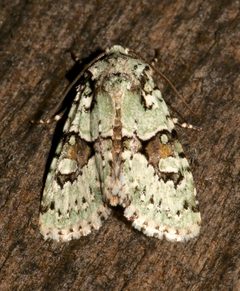
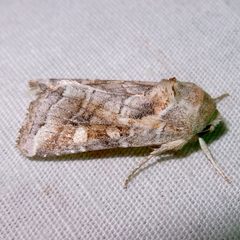
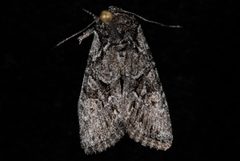
within Lacinipolia cannot be reliably distinguished by external appearance alone. range from mottled gray forms with reflective wing to green coloration. Some species likely rest on lichen-covered bark during daylight hours. Accurate identification to species level requires dissection and examination of genitalia or other internal structures.
Images
Distribution
North America, with records from the United States including Colorado and Vermont. The appears to have broad continental distribution, with multiple documented across diverse regions.
Seasonality
have been observed in mid-summer; specifically, records exist for July in Colorado.
Behavior
are and strongly attracted to artificial light sources, particularly blacklights. Activity peaks during summer months.
Similar Taxa
- AcrolophusBoth are small to medium-sized attracted to lights, but Acrolophus belongs to Acrolophidae and has larvae that construct silken tubes at grass bases.
- EthmiaSimilar size and light attraction, but Ethmia ( Depressariidae) has distinctive upturned palps resembling horns between and is typically associated with oak woodlands.
More Details
Taxonomic Note
The was established by James Halliday McDunnough in 1937. It is classified within tribe Eriopygini of Noctuinae.
Species Diversity
The contains at least 80 described , with many described by Selman & Leuschner in 2001 and additional species described as recently as 2015 (L. dimocki Schmidt, 2015).