
Lacinipolia buscki
Barnes & Benjamin, 1927
cutworm moth, dart moth
Lacinipolia buscki is a noctuid described by Barnes and Benjamin in 1927. It belongs to the Lacinipolia, a group of owlet moths commonly known as cutworms or dart moths. The species has a disjunct distribution spanning Australia and North America, an unusual biogeographic pattern for a noctuid. are attracted to light and are active during summer months. The MONA (Moth Photographers Group) or Hodges number for this species is 10421.
Pronunciation
How to pronounce Lacinipolia buscki: /lɑːˌsɪnɪˈpoʊliə ˈbʌski/
These audio files are automatically generated. While they are not always 100% accurate, they are a good starting point.
Identification
within Lacinipolia are morphologically similar and typically cannot be distinguished by external appearance alone. Reliable identification requires examination of genitalia. The can be recognized by the overall 'owlet moth' form: stout body, dull coloration, and forewings that fold over the at rest. Lacinipolia buscki is assigned MONA/Hodges number 10421.
Images
Appearance
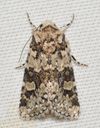
are medium-sized noctuid . One observed specimen was mottled gray with reflective on the wings; another was green and likely uses lichen-covered tree trunks as resting substrate. As with most Lacinipolia , identification to species level based on external appearance alone is not reliable.
Habitat
Observations come from urban and suburban settings where are attracted to artificial light sources. The green morph likely rests on lichen-covered tree trunks during daylight hours. Specific associations for the larval stage are not documented.
Distribution
Disjunct distribution in Australia and North America. In North America, recorded from Colorado and other regions; Australian records also confirmed. The trans-Pacific distribution pattern is unusual among Noctuidae and may reflect either natural or human-mediated introduction.
Seasonality
have been observed in July, coinciding with National Week observations in Colorado. Activity period likely spans summer months in temperate regions.
Life Cycle
Complete with , larva (), pupa, and stages. Specific details of the for this are not documented. Larval stage of related Lacinipolia species are ground-dwelling cutworms that feed on herbaceous plants.
Behavior
are and attracted to ultraviolet light sources. Two color morphs (gray and green) have been observed; the green form likely employs against lichen substrates when at rest during daylight.
Ecological Role
may serve as prey for including bats and night-flying birds. Larval undocumented; related function as herbivores in soil and ground-level .
Human Relevance
Not known as an agricultural pest. Attracted to blacklights and mercury vapor lights, making it detectable during survey events. The unusual trans-Pacific distribution pattern makes it of biogeographic interest.
Similar Taxa
- Other Lacinipolia speciesExternal is insufficient for -level identification; genital dissection required for definitive separation
- Eriopygini tribe membersShare general 'cutworm moth' appearance; Lacinipolia distinguished by specific genitalic characters
More Details
Taxonomic authority
Original description by William Barnes and Foster Hendrickson Benjamin in 1927; originally described as Polia buscki before transfer to Lacinipolia
Nomenclatural code
MONA ( Photographers Group North America) / Hodges number 10421 assigned for North American identification purposes