
Polia
Ochsenheimer, 1816
Species Guides
9- Polia discalis
- Polia imbrifera(Cloudy Arches Moth)
- Polia nimbosa(Stormy Arches)
- Polia nugatis(cutworm)
- Polia piniae(piney moth)
- Polia propodea(Scarce Boreal Arches)
- Polia purpurissata(Purple Arches Moth)
- Polia richardsoni(Alpine Arches)
- Polia rogenhoferi(Boreal Arches)
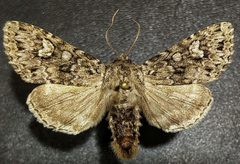
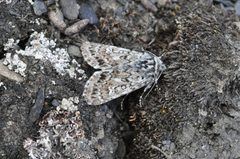
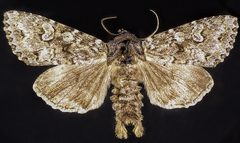
Polia is a of owlet moths in the Noctuidae, established by Ochsenheimer in 1816. The genus includes the Grey Arches (Polia nebulosa), a with a recently sequenced as part of the Darwin Tree of Life Project. Polia species are characterized by variable forewing coloration and are found in temperate regions across Europe and Asia.
Pronunciation
How to pronounce Polia: //ˈpoʊ.li.ə//
These audio files are automatically generated. While they are not always 100% accurate, they are a good starting point.
Images
Habitat
Woodland areas; in mountainous regions such as the Alps, found at elevations up to about 1,600 metres
Distribution
Temperate Europe and Asia, extending as far east as Japan; absent from northernmost Fennoscandia and southern parts of the Iberian Peninsula, Italy, and Greece; fairly widespread throughout England, Scotland and Northern Ireland
Seasonality
fly in June and July
Behavior
attracted to both light and sugar
Sources and further reading
- BugGuide
- Wikipedia
- iNaturalist taxon
- NCBI Taxonomy
- Catalogue of Life
- The S.L.E.E.P.ing Beauty: new Research Idea suggests sedation-led chemotherapy to avoid pain | Blog
- chemotherapy | Blog
- cancer research | Blog
- public health | Blog
- medicine | Blog
- The genome sequence of the Grey Arches moth, Polia nebulosa Hufnagel, 1766.