
Caenurgina
McDunnough, 1937
grass moths, loopers
Species Guides
4- Caenurgina annexa(Banded Grass Moth)
- Caenurgina caerulea(Cerulean Looper Moth)
- Caenurgina crassiuscula(Clover Looper)
- Caenurgina erechtea(Forage Looper)
Caenurgina is a of in the Erebidae, containing several commonly known as grass moths or loopers. The genus includes widespread North American species such as the forage looper (C. erechtea), clover looper (C. crassiuscula), and cerulean looper moth (C. caerulea). These moths are associated with open including lawns, meadows, and agricultural fields.
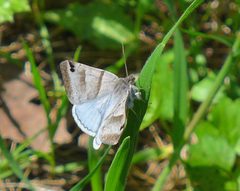
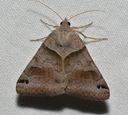
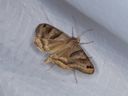
Pronunciation
How to pronounce Caenurgina: /kaɪˈnɜːrdʒɪnə/
These audio files are automatically generated. While they are not always 100% accurate, they are a good starting point.
Images
Habitat
Open including grasslands, meadows, lawns, pastures, and agricultural fields. in this are frequently encountered in human-modified environments with abundant herbaceous vegetation.
Distribution
North America, with distributed across the United States and Canada. Records include Vermont and other eastern and central U.S. states.
Seasonality
active in spring and summer. The forage looper (C. erechtea) has been observed as an early spring in Kansas, appearing by late March.
Diet
Larvae feed on grasses, clover, and alfalfa. The forage looper caterpillar specifically consumes grasses (Poaceae), clover (Trifolium), and alfalfa (Medicago sativa).
Life Cycle
Complete with , larva (caterpillar), pupa, and stages. Larvae are loopers (inchworm-type caterpillars) with reduced that move with a characteristic looping gait.
Behavior
are and attracted to blacklights. They can be flushed from lawns and grassy areas during the day, particularly when vegetation is tall.
Ecological Role
Larvae function as herbivores in grassland and agricultural . Caterpillars contribute to nutrient cycling through consumption and processing of herbaceous plant material.
Human Relevance
The forage looper and related are common in lawns and pastures. Caterpillars feed on clover and alfalfa, potentially affecting forage crops, though economic impact is generally minor. are frequently encountered by naturalists and photographers at blacklight setups.
Similar Taxa
- Nomophila nearctica (Lucerne Moth)Also a grass-feeding with similar preferences and narrow-winged appearance, but belongs to Crambidae rather than Erebidae. Lucerne moth has a more slender, elongate silhouette and rests with wings folded tightly against the body.
- Anavitrinella pampinaria (Common Gray)Spring-flying with cryptic gray coloration, but is a geometrid moth with different wing shape and resting posture. Caterpillars are inchworms but feed on woody plants including clover, ash, and elm rather than primarily grasses.