
Anavitrinella pampinaria
(Guenée, 1857)
common gray, North American Common Gray
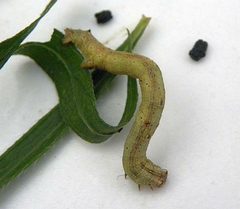
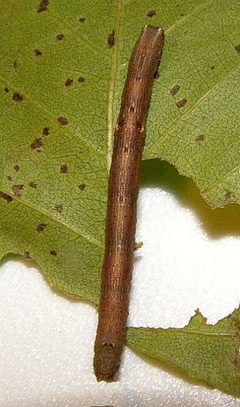
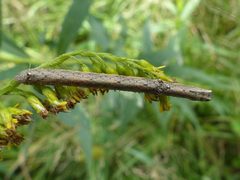
Anavitrinella pampinaria, commonly known as the common gray or North American Common Gray, is a geometrid widespread across North America. are small to medium-sized with muted gray coloration and relatively plain wing patterns. The is notable for its extended season from early spring through autumn and its larval stage that feeds on diverse woody and herbaceous plants. Caterpillars are classic "inchworms" with reduced , typical of the Geometridae.
Pronunciation
How to pronounce Anavitrinella pampinaria: /ˌænəˌvaɪtrɪˈnɛlə ˌpæmpɪˈnɛəriə/
These audio files are automatically generated. While they are not always 100% accurate, they are a good starting point.
Identification
The combination of small size, plain gray coloration, and lack of distinctive markings makes this challenging to identify visually. It is most reliably distinguished from similar gray geometrids by its early spring period (March–April in southern regions), which precedes most look-alike species. The scalloped wing margins and subtle speckled pattern are helpful when visible. Dissection or may be required for definitive identification of worn or aberrant specimens. Similar species include other Anavitrinella species and various gray Ennominae, which often differ in flight season or geographic range.
Images
Habitat
Occurs in diverse open and wooded including deciduous forests, forest edges, riparian corridors, suburban gardens, parks, and agricultural areas. are frequently attracted to artificial lights. Larval habitat encompasses the foliage of plants across these varied environments.
Distribution
Widespread across North America from southern Canada through the contiguous United States to Mexico. Absent from Arctic regions. Documented from Alberta, Manitoba, and Saskatchewan in Canada; present throughout the eastern, central, and western United States.
Seasonality
are active from April to October, with peak abundance varying by latitude. In Kansas, adults have been observed in late March during unseasonably warm conditions. The extended season suggests multiple per year in warmer regions.
Diet
Larvae are , feeding on leaves of Malus (apple), Pyrus (pear), Fraxinus (ash), Populus (poplar), Salix (willow), Trifolium (clover), and additional woody and herbaceous plants. do not feed.
Host Associations
- Malus - larval food plantapple
- Pyrus - larval food plantpear
- Fraxinus - larval food plantash
- Populus - larval food plantpoplar
- Salix - larval food plantwillow
- Trifolium - larval food plantclover
Life Cycle
Complete with , larva, pupa, and stages. Larvae are active feeders on foliage, developing through several instars as characteristic inchworms. occurs in soil or leaf litter. Multiple per year are likely in southern portions of the range, with adults appearing from early spring through autumn. stage not definitively documented but likely as pupa or late-instar larva.
Behavior
are and strongly attracted to ultraviolet and white light sources, frequently appearing at blacklight sheets. When disturbed at rest, adults may drop to the ground and remain motionless, relying on cryptic coloration for protection. Larvars exhibit typical geometrid looping locomotion and freeze when disturbed, often resembling twigs.
Ecological Role
Larvae function as herbivores, consuming foliage of diverse woody and herbaceous plants. They serve as prey for birds, , and other . may contribute to pollination though this has not been specifically documented. The is considered a minor occasional pest in apple orchards and soybean fields.
Human Relevance
Occasional pest of apple orchards; larvae can cause minor defoliation of fruit trees. Documented as a pest potential in soybean agroecosystems. Otherwise harmless to humans and not known to cause significant economic damage. Frequently encountered by citizen scientists during -lighting events.
Similar Taxa
- Other Anavitrinella speciesSimilar plain gray appearance; require genital dissection or molecular analysis for separation
- Various gray Ennominae (Geometridae)Convergent cryptic coloration; differ in season, geographic range, or subtle wing pattern details
- Lomographa vestaliata (White Spring Moth)Similar early spring and plain appearance, but typically whiter with more distinct markings
More Details
Taxonomic history
Originally described as Boarmia pampinaria by Guenée in 1857; later transferred to Anavitrinella. The 1858 date in some citations refers to publication year of the work containing the description.
Research significance
Subject of agricultural entomology research regarding potential as a soybean pest (Journal of Economic Entomology, 1983), though it remains a minor rather than major pest .