
Lomographa vestaliata
(Guenée, 1858)
White Spring Moth, Spring Faerie
A small, all-white geometrid with a wingspan of 15–23 mm. are and active in spring, often associated with flowering plants. The occurs across much of North America in dry, shrubby .
Pronunciation
How to pronounce Lomographa vestaliata: /loʊˈmoʊɡrəfə vɛsˈtæliˌeɪtə/
These audio files are automatically generated. While they are not always 100% accurate, they are a good starting point.
Identification
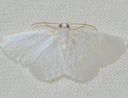
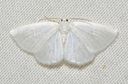
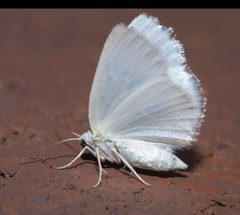
Distinguished from other small white by its completely unmarked, shiny white wings and fringed margins. The spring activity period and association with Cestrum nocturnum flowers provide additional field clues. Similar white geometrids often show faint markings or different resting postures.
Images
Appearance
Solid white throughout: , body, and all four wings lack markings and appear shiny or translucent. Wingspan 15–23 mm. Rests with wings open, exposing both forewings and hindwings. Outer wing margins fringed.
Habitat
Xeric shrubby edges and woodlands; prefers dry climates.
Distribution
North America: Newfoundland west to south-eastern British Columbia, south to Florida, Texas, and Mexico. Recorded from Alberta, Manitoba, and Saskatchewan in Canada, and Vermont in the United States.
Seasonality
on wing in spring; activity.
Diet
Larvae feed on Prunus, Cestrum, Crataegus, Sorbus, Malus, Physocarpus, and Viburnum .
Behavior
are . Has been observed pollinating flowers of Cestrum nocturnum.
Ecological Role
function as of Cestrum nocturnum. Larvae are herbivores on various woody shrubs and trees.
Similar Taxa
- Other small white geometrid mothsL. vestaliata is distinguished by completely unmarked wings, fringed margins, and spring activity; most similar show faint markings or habits.