
Anavitrinella
McDunnough, 1922
Common Gray (for A. pampinaria)
Species Guides
4- Anavitrinella addendaria
- Anavitrinella atristrigaria(Gulf Coast Gray)
- Anavitrinella ocularia
- Anavitrinella pampinaria(common gray)
Anavitrinella is a of geometrid moths erected by James Halliday McDunnough in 1922. The genus contains four recognized , with Anavitrinella pampinaria (common gray) being the most widespread and well-documented. Species in this genus are characterized by relatively plain, grayish wing coloration that makes identification challenging. The caterpillars are inchworms typical of the Geometridae.
Pronunciation
How to pronounce Anavitrinella: //ˌænəˌvɪtrɪˈnɛlə//
These audio files are automatically generated. While they are not always 100% accurate, they are a good starting point.
Identification
are difficult to identify to due to plain gray coloration and lack of clear wing markings. Examination of genitalia is often required for definitive species determination. A. pampinaria is distinguished by its widespread distribution and early spring period. The can be recognized by the combination of geometrid with unusually plain, unmarked forewings.
Images
Appearance
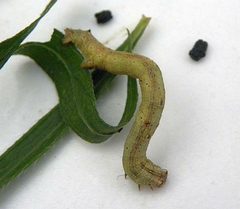
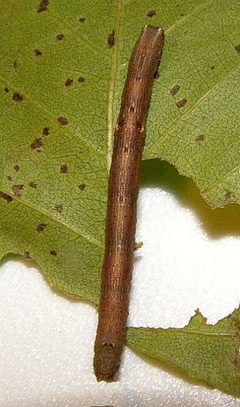
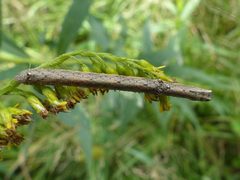
have plain, grayish wings with reduced or indistinct markings. Wing patterns lack bold lines or spots, contributing to identification difficulty. The overall coloration is cryptic, blending with bark and lichen substrates. Caterpillars are slender, typical inchworms (loopers) with reduced , moving with characteristic looping gait.
Habitat
Occurs in diverse environments including deciduous woodlands, forest edges, and agricultural areas. A. pampinaria has been documented in soybean fields, indicating adaptability to cultivated .
Distribution
North America. A. pampinaria is widespread across the continent; A. addendaria, A. atristrigaria, and A. ocularia have more restricted eastern distributions.
Seasonality
A. pampinaria has an early spring period, with active from March through May depending on latitude. Other likely have similar seasonal but are less documented.
Diet
Caterpillars of A. pampinaria feed on clover, ash, elm, willow, pear, and apple; has been observed feeding on soybean (Glycine max) in agricultural contexts. Diet of other in the is not documented.
Host Associations
- Trifolium - food plantclover
- Fraxinus - food plantash
- Ulmus - food plantelm
- Salix - food plantwillow
- Pyrus - food plantpear
- Malus - food plantapple
- Glycine max - food plantsoybean; agricultural pest context
Life Cycle
Complete with , larva (inchworm), pupa, and stages. Larvae are slender loopers typical of Geometridae. Specific details beyond adult period are not documented for most .
Behavior
are and attracted to light. They rest with wings folded flat or tent-like over the body during the day, concealed on bark or other substrates.
Ecological Role
Caterpillars function as herbivores in deciduous forest and agricultural . A. pampinaria has documented pest potential in soybean crops. likely serve as prey for including bats and night-foraging birds.
Human Relevance
A. pampinaria has been identified as a potential pest in soybean agriculture, though economic impact appears limited based on available literature. Otherwise, in this have minimal direct interaction with humans.
Similar Taxa
- IridopsisSimilar plain gray geometrid moths; requires genital examination for separation
- LomographaOther Ennominae with reduced wing markings; similar cryptic appearance
- Other Ennominae generaMany geometrid moths share plain gray coloration and require expert identification
More Details
Taxonomic history
erected by Canadian entomologist James Halliday McDunnough in 1922. McDunnough also described two of the four included (A. atristrigaria with Barnes, 1913; A. ocularia with Barnes, 1917).
Identification challenges
The plain, unmarked wing coloration that characterizes this makes field identification to nearly impossible without specimen examination. This has likely resulted in underreporting of less common species.