
Iridopsis
Warren, 1894
Species Guides
18- Iridopsis clivinaria(mountain mahogany looper moth)
- Iridopsis cypressaria(cypress looper)
- Iridopsis dataria
- Iridopsis defectaria(Brown-shaded Gray)
- Iridopsis emasculatum(Tarnished Gray)
- Iridopsis ephyraria(Pale-winged Gray)
- Iridopsis fragilaria(Kiawe Moth)
- Iridopsis gemella
- Iridopsis humaria(small purplish gray)
Iridopsis is a of geometrid moths ( Geometridae) established by Warren in 1894. The genus contains approximately 20 described distributed across the Americas. Several species are economically significant as defoliators of trees, including eucalyptus pests in Brazil and native tree feeders in Chile. plant associations vary among species, with some showing narrow specificity and others broader feeding ranges.
Pronunciation
How to pronounce Iridopsis: //ˌɪrɪˈdɒpsɪs//
These audio files are automatically generated. While they are not always 100% accurate, they are a good starting point.
Identification
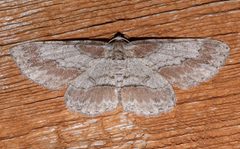
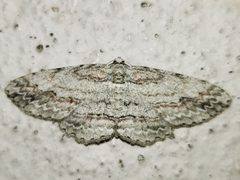
Members of Iridopsis are classified within the Ennominae of Geometridae. -level identification typically relies on wing pattern characteristics, including grayish ground coloration with various lines, shades, and spots; specific patterns referenced in include 'bent-line,' 'oblique,' 'pale-winged,' and 'brown-shaded' morphologies. Accurate identification to species generally requires examination of genitalia or detailed wing pattern analysis by .
Images
Habitat
vary by . Iridopsis panopla occurs in commercial eucalyptus plantations in Brazil. Iridopsis hausmanni inhabits coastal valleys of the northern Chilean Atacama Desert, specifically the Azapa and Chaca valleys. Nearctic species occupy diverse environments across North America.
Distribution
The is distributed across the Americas. Documented occurrences include: Brazil (Mato Grosso do Sul: Ribas do Rio Pardo, Três Lagoas), northern Chile (Arica Province: Azapa valley, Chaca valley), and North America (multiple Nearctic ). The full geographic range extends from North America through South America, though species distributions are heterogeneous.
Diet
Larvae are folivorous. Specific records include: Eucalyptus grandis and Eucalyptus urograndis (Myrtaceae) for I. panopla in Brazil; Schinus molle and Haplorhus peruviana (Anacardiaceae) for I. hausmanni in Chile. Nearctic have been reported from various host plants, though some show narrower specificity than others.
Host Associations
- Eucalyptus grandis - larval plantI. panopla in Brazil
- Eucalyptus urograndis - larval plantI. panopla in Brazil
- Schinus molle - larval plantI. hausmanni in Chile
- Haplorhus peruviana - larval plantI. hausmanni in Chile
- Brachymeria annulata - Hymenoptera: Chalcididae; emerges from I. panopla pupae
- Trichospilus diatraeae - Hymenoptera: Eulophidae; emerges from I. panopla pupae
- Trichogramma pretiosum - Hymenoptera: Trichogrammatidae; parasitizes I. panopla
- Hypodynerus andeus - Potter wasp; I. hausmanni larvae noted as prey in Azapa valley
Life Cycle
Complete with , larval, pupal, and stages. For I. panopla, eggs hatch and are parasitized by Trichogramma pretiosum with after 9 days; pupal stage lasts at least 18 days based on emergence timing. For I. hausmanni, eggs laid by females (54 eggs observed from one specimen), with larvae reared to adult stage on suitable over periods of several months; first instar larvae die if offered unsuitable host plants.
Behavior
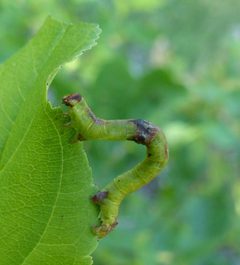
Larvae are external feeders on leaves. I. hausmanni larvae exhibit strong rejection toward unsuitable plants, including complete avoidance of Fabaceae despite close taxonomic relationship with a that utilizes Fabaceae. This suggests active host selection rather than indiscriminate feeding.
Ecological Role
Herbivorous larvae function as folivores on trees and shrubs. Some are significant pests in commercial forestry, particularly I. panopla in Brazilian eucalyptus plantations. Serve as for multiple species (Brachymeria annulata, Trichospilus diatraeae, Trichogramma pretiosum) and as prey for insectivorous organisms including potter wasps. Component of florivorous caterpillar in native and managed .
Human Relevance
I. panopla is an economically important pest of eucalyptus plantations in Brazil, prompting research into using including Trichogramma pretiosum. The is well-represented in entomological collections and citizen science platforms, with nearly 50,000 observations on iNaturalist.
Similar Taxa
- Other Ennominae generaSimilar wing patterns and body form; distinguished by genitalic characters and specific wing pattern elements
- Iridopsis species within genusMany share grayish coloration and linear wing patterns; require detailed examination of pattern elements, genitalia, or geographic context for reliable separation
More Details
Taxonomic note
Authority sometimes cited as Warren, 1825 in some sources, but Warren, 1894 is the correct original publication date for the .
Host plant specificity
range appears variable across : I. hausmanni shows narrow specificity to Anacardiaceae and rejects Fabaceae, while some Nearctic species are reported as more . This suggests that generalizations about feeding habits across the are not warranted.
Sources and further reading
- BugGuide
- Wikipedia
- iNaturalist taxon
- NCBI Taxonomy
- Catalogue of Life
- First host plant records for Iridopsis hausmanni Vargas (Lepidoptera, Geometridae) in the coastal valleys of northern Chile
- First record of Trichogramma pretiosum parasitizing Iridopsis panopla eggs in eucalyptus in Brazil
- First record in Brazil ofBrachymeria annulata(Fabricius) (Hymenoptera: Chalcididae) andTrichospilus diatraeaeCherian and Margabandhu (Hymenoptera: Eulophidae) parasitising pupae ofIridopsis panoplaProut (Lepidoptera: Geometridae) in eucalyptus (Myrtaceae)