
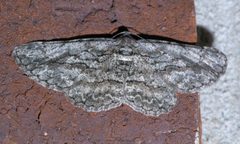
Iridopsis humaria
(Guenée, [1858])
small purplish gray
Iridopsis humaria, commonly known as the small purplish gray, is a of geometrid in the Geometridae. The species is assigned MONA/Hodges number 6584. Larvae of this species have been documented feeding on soybean (Glycine max) as a favored plant. The species belongs to a whose larvae are known for their distinctive 'inching' locomotion characteristic of geometrid caterpillars.
Pronunciation
How to pronounce Iridopsis humaria: /ˌɪrɪˈdɒpsɪs hjuˈmɑːriə/
These audio files are automatically generated. While they are not always 100% accurate, they are a good starting point.
Images
Distribution
Recorded from North America, including Canadian provinces of Alberta, Manitoba, and Saskatchewan, and the U.S. state of Vermont.
Diet
Larvae feed on soybean (Glycine max) as a favored plant.
Host Associations
- Glycine max - larval plantsoybean
Similar Taxa
- Iridopsis herseFormerly placed in same (as Anacamptodes herse), but I. herse is strictly Central American and not sympatric with I. humaria in North America.
- Iridopsis humilisCongeneric with similar plant associations; distinguished by purple-brown/yellow-green coloration and relatively thickened body in I. humilis, unlike I. humaria.
More Details
Taxonomic history
The Iridopsis was revised by Rindge (1966), who synonymized Anacamptodes with Iridopsis. The was originally described as Boarmia humaria by Guenée.
Larval morphology
As a geometrid larva, possesses legs only at the and extremes of the body, resulting in the characteristic 'looping' or 'inching' locomotion that gives the its of 'inchworms' or 'measuring worms'.