
Psilocorsis cryptolechiella
(Chambers, 1872)
Black-fringed Leaftier Moth, Black-fringed Psilocorsis Moth, Beech Leaftier
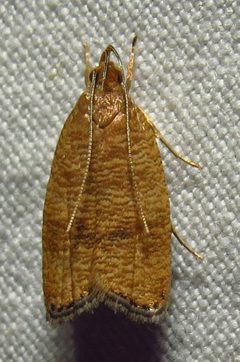
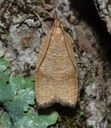
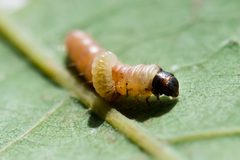
Psilocorsis cryptolechiella is a small in the Depressariidae known for its distinctive larval of tying leaves together to form shelters. The is primarily associated with beech trees (Fagus species) and has been documented across the eastern and central United States. are modest in appearance with a wingspan of approximately 16 mm. The larvae create characteristic leaf shelters by binding leaves together with silk, earning the species its .
Pronunciation
How to pronounce Psilocorsis cryptolechiella: /ˌsaɪloʊˈkɔrsɪs ˌkrɪptoʊləˈkiːɛlə/
These audio files are automatically generated. While they are not always 100% accurate, they are a good starting point.
Identification
Larvae are identified by their distinctive leaf-tying , creating shelters from bound leaves on beech trees. are small (16 mm wingspan) and require examination for definitive identification. The Psilocorsis contains multiple similar ; precise identification may require dissection or molecular analysis. Association with Fagus grandifolia (American beech) is a strong indicator.
Images
Habitat
Associated with deciduous forests containing beech trees. Larval consists of the leaves of Fagus , where shelters are constructed. habitat requirements are not well documented but likely include woodland edges and forested areas where plants occur.
Distribution
Documented in the United States: Alabama, Illinois, Massachusetts, Pennsylvania, South Carolina. GBIF records indicate presence in Manitoba, Canada. The appears to be restricted to eastern and central North America, with distribution likely tied to the range of Fagus grandifolia.
Seasonality
activity period not explicitly documented. Larval activity occurs during the growing season when beech leaves are available. As a leaf-tying , larvae are most likely to be observed from late spring through summer when fresh foliage is present.
Diet
Larvae feed on Fagus , specifically documented on Fagus grandifolia (American beech). likely do not feed, or feeding habits are undocumented.
Host Associations
- Fagus grandifolia - larval food plantAmerican beech; larvae create leaf shelters on this
- Fagus - larval food plant-level association; specific may vary
Life Cycle
Complete with , larva, pupa, and stages. Larvae create leaf shelters by binding leaves together with silk, within which they feed and eventually pupate. Specific details of egg placement, site, and stage are not documented in available sources.
Behavior
Larvae are leaf-tiers, constructing shelters by binding two or more leaves together with silk to form a protected feeding chamber. This distinguishes them from leaf-rollers, which typically involve rolling a single leaf. When disturbed in their shelters, larvae may remain motionless or drop from the shelter on a silk thread.
Ecological Role
Herbivore on beech trees; larvae function as leaf-tiers that modify leaf structure. The leaf shelters may provide microhabitats for other small organisms. Larvae serve as prey for predatory , including mason wasps in the Ancistrocerus and possibly Monobia quadridens.
Human Relevance
Minor significance. The is not considered a major pest of beech trees. Documented as prey for beneficial predatory that may contribute to of caterpillar . No documented economic impact on forestry or horticulture.
Similar Taxa
- Psilocorsis quercicellaAnother Psilocorsis that creates leaf shelters on oaks; may overlap in range and requires identification
- Psilocorsis reflexaSimilar leaf-tying and ; identification requires examination of genitalia or other subtle characters
- Sciota uvinella (Sweetgum Leafroller)Leaf-rolling caterpillar preyed upon by similar ; different (Pyralidae) and plant association
More Details
Predation by wasps
Documented as prey for the mason wasp Ancistrocerus campestris, which attempts to extract larvae from their leaf shelters. Also listed as prey for Monobia quadridens (Four-toothed Mason Wasp) in one source, though this requires confirmation.
Taxonomic note
placement has varied; some sources historically placed Psilocorsis in Oecophoridae or Amphisbatidae. Currently accepted as Depressariidae based on molecular and morphological studies.
Leaf shelter construction
The 'sandwich' configuration of bound leaves distinguishes leaf-tiers from leaf-rollers. Multiple leaves may be involved, creating a more complex shelter than the single-leaf rolls typical of many Tortricidae.