
Sciota uvinella
(Ragonot, 1887)
sweetgum leafroller moth
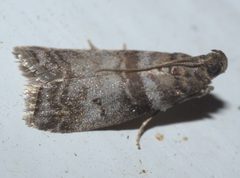
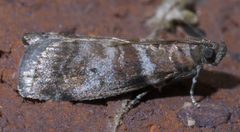
Sciota uvinella is a small snout moth in the Pyralidae, commonly known as the sweetgum leafroller . The was described by Ragonot in 1887 and occurs in eastern North America. Its derives from the larval habit of rolling or folding leaves of its plant, sweetgum (Liquidambar styraciflua). The species is notable as a primary prey item for the four-toothed mason wasp, Monobia quadridens, which paralyzes the caterpillars to provision its nest .
Pronunciation
How to pronounce Sciota uvinella: /ˈsʃi.oʊ.tə ˌʌ.vɪˈnɛl.ə/
These audio files are automatically generated. While they are not always 100% accurate, they are a good starting point.
Identification
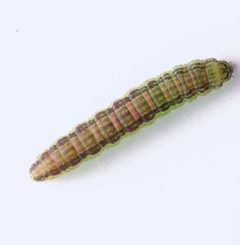
are small snout moths with the characteristic elongated labial palps typical of Pyralidae. Specific diagnostic features for distinguishing S. uvinella from congeneric are not well documented in available sources. The Sciota contains multiple similar-appearing species, and identification to species level likely requires examination of genitalia or association with larval plant. Larvae are leafrollers, constructing shelters by rolling or folding sweetgum leaves and binding them with silk.
Images
Habitat
Associated with sweetgum (Liquidambar styraciflua) trees; occurs in forests, woodlands, and urban or suburban areas where this plant grows.
Distribution
Eastern North America: recorded from New Jersey south to Florida, west to Texas and Kentucky.
Seasonality
are active from April to September.
Diet
Larvae feed exclusively on sweetgum (Liquidambar styraciflua). feeding habits are not documented.
Host Associations
- Liquidambar styraciflua - larval food plantsweetgum; larvae roll or fold leaves to create feeding shelters
Behavior
Larvae are leafrollers, constructing protective shelters by manipulating plant leaves. They have been observed as a primary prey item for the four-toothed mason wasp (Monobia quadridens), which hunts, paralyzes, and provisions nests with these caterpillars.
Ecological Role
Larvae function as herbivores on sweetgum and serve as a significant food source for predatory . The appears to be a preferred prey item for Monobia quadridens, suggesting a specialized -prey relationship.
Human Relevance
Minor significance as a native herbivore on sweetgum; not known to be a pest of economic importance. The has value in supporting of beneficial predatory .
Similar Taxa
- Epipaschia superatalisAlso preyed upon by Monobia quadridens; dimorphic macalla moth in Pyralidae with similar size and
- Pococera asperatellaAlso preyed upon by Monobia quadridens; maple webworm moth with leaf-rolling larval habits
- Other Sciota speciesCongeneric snout moths with similar ; require detailed examination for accurate identification