
Epipaschia superatalis
Clemens, 1860
Dimorphic Macalla Moth
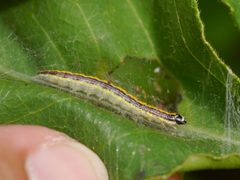
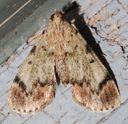
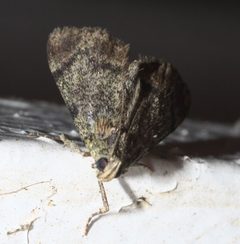
Epipaschia superatalis, commonly known as the Dimorphic Macalla , is a small pyralid moth native to eastern North America. The is named for the observed in wing patterns. Adults are active from late spring through summer, with a period spanning May to August. The species has been documented as prey for the mason wasp Monobia quadridens, which hunts its caterpillars to provision nests.
Pronunciation
How to pronounce Epipaschia superatalis: /ˌɛpɪˈpæskiə suːpəˈreɪtəlɪs/
These audio files are automatically generated. While they are not always 100% accurate, they are a good starting point.
Identification
The combination of small size (17–25 mm wingspan), eastern North American distribution, and seasonal activity from late May through August helps distinguish this from similar pyralid moths. in wing pattern is a key characteristic, though specific pattern differences require detailed examination.
Images
Distribution
Eastern North America. Specific records include Vermont and other eastern U.S. states.
Seasonality
are on wing from late May to August.
Ecological Role
The caterpillars serve as prey for predatory , including Monobia quadridens (Four-toothed Mason Wasp), which hunts and paralyzes them to provision nest .
Similar Taxa
- Sciota uvinellaBoth are pyralid moths with similar size and eastern North American distribution; both are prey of Monobia quadridens. Sciota uvinella belongs to Phycitinae rather than Epipaschiinae.
- Pococera asperatellaSimilar size range and shared (Monobia quadridens); Pococera asperatella (Maple Webworm Moth) is in the same Epipaschiinae.
More Details
Predator-Prey Relationship
Documented as a prey for Monobia quadridens, which specifically targets leaf-rolling caterpillars including Epipaschia superatalis among other pyralid, crambid, elachistid, and tortricid larvae.