
Epipaschia
Clemens, 1860
Species Guides
1- Epipaschia superatalis(Dimorphic Macalla Moth)
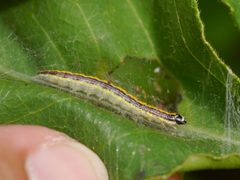
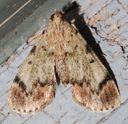
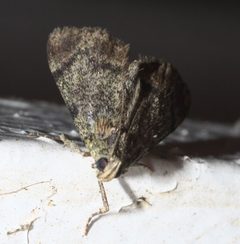
Epipaschia is a of snout moths in the Pyralidae, Epipaschiinae. The genus was established by James Brackenridge Clemens in 1860. It contains at least three described : Epipaschia mesoleucalis, Epipaschia ochrotalis, and the type species Epipaschia superatalis. The caterpillars of Epipaschia superatalis, known as the Dimorphic Macalla , serve as prey for the mason wasp Monobia quadridens.
Pronunciation
How to pronounce Epipaschia: /ˌɛpɪˈpaskiə/
These audio files are automatically generated. While they are not always 100% accurate, they are a good starting point.
Images
Distribution
Recorded from the eastern United States, including Vermont. The type Epipaschia superatalis has been documented in the eastern U.S. west to Kansas, New Mexico, and Wisconsin, with additional records in northern Mexico.
Host Associations
- Monobia quadridens - preyCaterpillars of Epipaschia superatalis are hunted by this mason wasp for provisioning nests
Ecological Role
The serves as a food source for predatory . Caterpillars of Epipaschia superatalis are among the prey items collected by the mason wasp Monobia quadridens, which hunts leaf-rolling caterpillars to provision its nest .
Similar Taxa
- Pococera asperatella (Maple Webworm Moth)Also in Pyralidae with caterpillars hunted by Monobia quadridens; both are leaf-rolling targeted by the same
- Sciota uvinella (Sweetgum Leafroller)Another pyralid with caterpillars serving as prey for Monobia quadridens; similar ecological role as a leaf-roller
More Details
Etymology and Classification
The name Epipaschia reflects its placement in the Epipaschiinae, a group of pyralid moths. The type E. superatalis was described in the same 1860 publication that established the genus.
Research Context
Epipaschia superatalis has been specifically identified in ecological studies of the mason wasp Monobia quadridens, providing detailed documentation of -prey relationships involving this otherwise poorly studied .