
Dilophonotini
Burmeister, 1878
Genus Guides
12Dilophonotini is a tribe of hawk moths ( Sphingidae) containing approximately 25 divided into two subtribes: Dilophonotina and Hemarina. The tribe includes both day-flying and , with Hemaris (clearwing moths) being particularly notable for their transparent wings and -mimicry. Members range from small to medium-sized sphingids with diverse wing patterns and body forms adapted to varied .
Pronunciation
How to pronounce Dilophonotini: /dɪˌlɒfənəˈtaɪnaɪ/
These audio files are automatically generated. While they are not always 100% accurate, they are a good starting point.
Identification
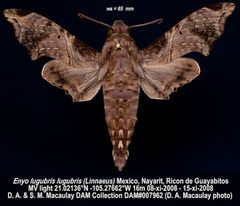
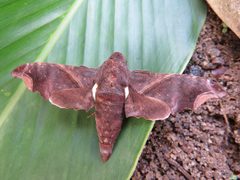
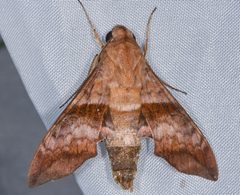
Dilophonotini is distinguished from other sphingid tribes primarily by genitalic and larval characteristics rather than superficial . Subtribe Hemarina (containing Hemaris and Cephonodes) is readily identified by reduced wing scaling creating transparent or semi-transparent wings, a trait rare elsewhere in Sphingidae. Subtribe Dilophonotina contains more typical sphingid forms but lacks the elongated and associated feeding specializations of the tribe Macroglossini. Larvae often possess distinctive caudal horns and specific setal arrangements that separate them from other sphingid groups.
Images
Distribution
The tribe has a broad distribution spanning the Nearctic, Neotropical, Palearctic, Oriental, and Afrotropical regions. Highest diversity occurs in the Neotropics, particularly within subtribe Dilophonotina. Hemarina shows a more disjunct distribution with Hemaris widespread in the Holarctic and Cephonodes distributed across the Oriental and Australasian regions.
Behavior
Members of subtribe Hemarina exhibit or activity, contrasting with the predominantly habits of most Sphingidae. Hemaris are known for their rapid, hovering flight and -mimicry, including transparent wings and often banded . Cephonodes species display similar diurnal activity with fast, darting flight patterns. Dilophonotina species are primarily nocturnal with typical sphingid hovering flight at flowers.
Human Relevance
Hemaris (clearwing moths) are frequently mistaken for bees or by observers, leading to common misidentifications in citizen science records. Some Dilophonotina larvae, particularly in Erinnyis and Enyo, are occasional pests of ornamental and crop plants including grape and spurge species. The tribe contributes to pollination of various flowering plants, though specific quantitative contributions remain poorly documented.
Similar Taxa
- MacroglossiniAnother tribe within Macroglossinae; distinguished by generally more elongated adapted for deeper corolla feeding and different larval morphological characters.
- PhilampeliniTribe within Macroglossinae with overlapping distribution; separated by differences in wing venation and male genital structure.
Misconceptions
Clearwing moths in subtribe Hemarina are frequently misidentified as bees, , or flies due to of transparent wings and banded coloration. This mimicry represents Batesian or Müllerian mimicry of hymenopteran stinging insects, not actual relationship.
More Details
Subtribal Classification
The tribe comprises two subtribes: Dilophonotina (Burmeister, 1878) with approximately 23 including Aellopos, Enyo, Erinnyis, and Pseudosphinx; and Hemarina (Tutt, 1902) containing only Hemaris and Cephonodes. This division reflects substantial ecological and morphological divergence between the clearwing moths and more typical sphingid forms.
Notable Genera
Erinnyis includes with larvae that feed on Euphorbiaceae and are sometimes economically significant. Pseudosphinx contains the single species P. tetrio, whose larvae defoliate Plumeria species. Hemaris contains approximately 17 species of clearwing moths widespread in the Northern Hemisphere.