
Aellopos
Hübner, 1819
Species Guides
4- Aellopos clavipes(Clavipes Sphinx)
- Aellopos fadus(Fadus Sphinx)
- Aellopos tantalus(Tantalus Sphinx)
- Aellopos titan(Titan Sphinx)
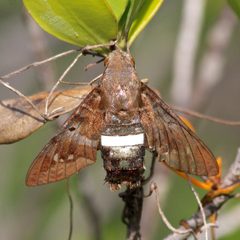
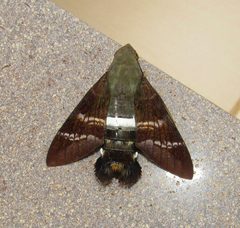
Aellopos is a of large day-flying in the Sphingidae (sphinx moths), first described by Jacob Hübner in 1819. The genus contains six recognized distributed from the eastern United States through Central America to South America. These moths are notable for their activity pattern, which is uncommon among sphingids. The genus belongs to the tribe Dilophonotini within the Macroglossinae.

Pronunciation
How to pronounce Aellopos: /ˈaɪ.ləˌpɒs/
These audio files are automatically generated. While they are not always 100% accurate, they are a good starting point.
Identification
Aellopos can be distinguished from other sphingid by their combination of large size, robust body, and . Specific identification to species level requires examination of wing pattern details, particularly the forewing shape and markings, and in some species the presence of distinctive leg modifications (clavipes = 'club foot' in A. clavipes).
Images
Distribution
Occurs from Maine in the northeastern United States, south through Central America, to Argentina and Uruguay in South America.
Behavior
are day-flying, an unusual trait among Sphingidae which are predominantly or .
Similar Taxa
- ErinnyisBoth are large New World sphingid with , but Erinnyis species generally lack the specific wing pattern elements and leg modifications found in Aellopos.
- HemarisHemaris (clearwing moths) are also day-flying sphingids, but are smaller, have partially transparent wings, and occur mainly in the Holarctic region rather than the Neotropics.
More Details
Species count
Six are currently recognized: A. blaini, A. ceculus, A. clavipes, A. fadus, A. tantalus, and A. titan.
Etymology
The name derives from Greek mythology; Aello was one of the Harpies.