
Pseudosphinx
Burmeister, 1855
tetrio sphinx, giant gray sphinx, frangipani hornworm, plumeria caterpillar, Rasta caterpillar
Species Guides
1- Pseudosphinx tetrio(tetrio sphinx)
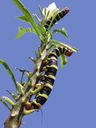
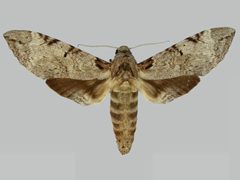
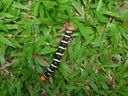
Pseudosphinx is a in the Sphingidae, containing only Pseudosphinx tetrio. The genus is notable for its highly specialized herbivory on toxic Apocynaceae plants and its striking aposematic larval coloration. are large brown sphinx moths with 12.7–14 cm wingspans. The caterpillars are among the largest hornworms in the Americas, exceeding 15 cm in length, and are serious defoliators of ornamental Plumeria throughout the tropical and subtropical Americas.
Pronunciation
How to pronounce Pseudosphinx: //ˌsjuːdoʊˈsfɪŋks//
These audio files are automatically generated. While they are not always 100% accurate, they are a good starting point.
Identification
distinguished from other large brown sphinx moths by combination of gray-white-black body banding and darker brown hindwings. Larvae unmistakable due to large size, velvety black ground color with yellow rings, red-orange , and prominent horn; no other in range matches this color pattern. provide additional confirmation.
Images
Habitat
Tropical and subtropical regions where plants of Apocynaceae occur; strongly associated with cultivated and wild Plumeria in gardens, parks, and natural areas.
Distribution
Native to tropical and subtropical Americas from southern and southwestern United States through Mexico, Central America, and Caribbean to Brazil; occasional individuals recorded as far north as northeastern United States.
Diet
Larvae feed exclusively on Apocynaceae, particularly Plumeria rubra, Plumeria alba, and Allamanda cathartica; feed on nectar including Catharanthus roseus and Caryocar brasiliense.
Host Associations
- Plumeria rubra - larval red frangipani
- Plumeria alba - larval white frangipani; so frequently infested that tree is nicknamed 'the wormy tree'
- Allamanda cathartica - larval golden trumpet
- Catharanthus roseus - nectar sourceMadagascar periwinkle
- Caryocar brasiliense - nectar sourcepequi
- Epidendrum ciliare - pollinationfringed star orchid; observed as in Puerto Rico
Life Cycle
laid in clusters of 50–100 on undersides of leaves; hatch in approximately 3 days; 5–6 larval instars lasting 23–24 days; early instars gregarious, later instars solitary or in small groups; prepupal stage approximately 4 days; pupal stage approximately 22 days in soil or leaf litter; total development from egg to approximately 53 days.
Behavior
Larvae detoxify toxic latex of Apocynaceae and selectively excrete compounds in rather than sequestering in body; early instars feed gregariously in colonies, later instars solitary; if handled, caterpillar bites and deploys ; occurs in leaf litter or under soil in silk cocoon; are and visit flowers for nectar.
Ecological Role
Specialized herbivore on toxic Apocynaceae; selective of plant compounds in may produce antimicrobial effects; of at least one orchid ; serves as food for specialized such as smooth-billed ani and squirrel cuckoo, which have evolved techniques to avoid toxic gut contents.
Human Relevance
Significant pest of ornamental Plumeria in tropical horticulture; caterpillars conspicuous and easily controlled by hand removal; cause skin irritation; Rasta caterpillar name in Martinique reflects cultural recognition of distinctive coloration.
Similar Taxa
- Manduca sextaSimilar large size and general body plan, but lacks black ground color with yellow rings and red-orange ; feeds on Solanaceae rather than Apocynaceae.
- Erinnyis elloAnother large brown sphinx moth with somewhat similar appearance, but larva is green or brown with diagonal white stripes and small horn, lacking aposematic black-yellow banding.