
Heterarthrinae
Tribe Guides
3Heterarthrinae is a of in the Tenthredinidae. Its larvae are leaf miners, feeding internally within leaf tissue and creating characteristic mines. The subfamily is distributed primarily across Eurasia and North America, with additional present in Africa and South America. It contains multiple organized into three recognized tribes: Caliroini, Fenusini, and Heterarthrini.
Pronunciation
How to pronounce Heterarthrinae: //ˌhɛtəˈrɑrθrɪniː//
These audio files are automatically generated. While they are not always 100% accurate, they are a good starting point.
Identification
Heterarthrinae are distinguished from other Tenthredinidae by their leaf-mining larval . may be identified to subfamily by examination of wing venation and genitalic structures, though definitive identification often requires knowledge. The subfamily contains three tribes with varying morphological characteristics: Caliroini, Fenusini, and Heterarthrini.
Images
Habitat
Associated with supporting their plants. Larval stage occurs within leaves of host plants, requiring living vegetation.
Distribution
Primarily Eurasia and North America. Several also occur in Africa and South America.
Diet
Larvae are leaf miners, feeding internally on leaf tissue of plants. Specific host plant associations vary by and .
Life Cycle
Complete with , larval, pupal, and stages. Larvae develop as leaf miners within plant foliage.
Behavior
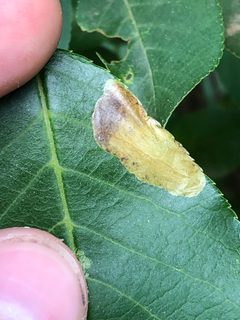
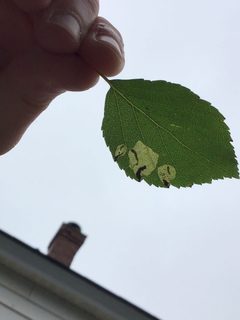
Larvae feed internally within leaf tissue, creating mines that are visible externally as pale or discolored trails or blotches on leaves.
Ecological Role
As leaf miners, larvae influence leaf physiology and may affect plant . They serve as food sources for and other natural enemies.
Human Relevance
Some may be of economic concern when plants include cultivated species. Leaf mines may reduce aesthetic value of ornamental plants.
Similar Taxa
- Other Tenthredinidae subfamiliesExternally feeding larvae; Heterarthrinae larvae are internal leaf miners whereas most other larvae feed externally on foliage
- Nepticulidae (moths)Also leaf miners, but are Lepidoptera with different and larval structure
- Agromyzidae (flies)Also leaf miners, but are Diptera with single pair of wings and different larval
More Details
Tribal classification
The is divided into three tribes: Caliroini (Caliroa, Endelomyia), Fenusini (Fenella, Fenusa, Fenusella, Metallus, Parna, Profenusa, Scolioneura), and Heterarthrini (Heterarthrus). Several remain of uncertain tribal placement: Hinatara, Neomessa, and Silliana.
Phylogenetic research
Molecular phylogenetic studies have examined the evolution of -plant use within this , indicating that host associations have diversified throughout its evolutionary history.