
Heterarthrini
Genus Guides
1Heterarthrini is a tribe of within the Tenthredinidae, Tenthredininae. Members are small, slender sawflies known for their leaf-mining larvae, which feed internally within leaf tissue of various plants. The tribe includes several , with Caliroa being the most frequently encountered. are generally inconspicuous and rarely observed compared to their more economically significant larval stages.
Pronunciation
How to pronounce Heterarthrini: //ˌhɛtɛrˈɑrθrɪnaɪ//
These audio files are automatically generated. While they are not always 100% accurate, they are a good starting point.
Identification
distinguished from other Tenthredinini by reduced wing venation with fewer crossveins and generally smaller, more slender body form. The tribe is most reliably identified through larval : Heterarthrini are leaf miners, whereas related tribes contain predominantly external feeders. Caliroa recognized by adults with distinctive wing venation and, in some , pale tibiae. Separation from other leaf-mining tribes (e.g., Fenusini) requires examination of larval mandibular structure and mine . Adults often require dissection of male genitalia for definitive species identification.
Images
Habitat
Associated with broadleaf trees and shrubs in temperate and forests, woodlands, parks, and urban plantings. Larval is the interior of living leaves; specific associations vary by and . found in or shrub layer near host plants, often resting on foliage. Most diverse in regions with substantial deciduous forest cover.
Distribution
Primarily Holarctic in distribution, with records from North America, Europe, and Asia. Present across temperate zones; diversity decreases toward southern range limits. Some (e.g., Caliroa) have broader distributions than others. Absent from tropical regions and the Southern Hemisphere.
Seasonality
activity generally coincides with leaf flush of plants, typically spring to early summer in temperate regions. Larval mines present from late spring through summer, with timing varying by latitude and host . with single per year; stage varies (prepupal larva or pupa in soil or leaf litter).
Diet
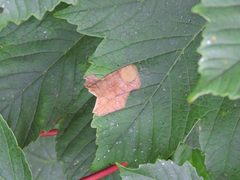
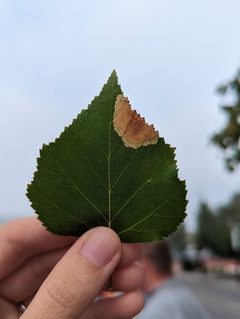
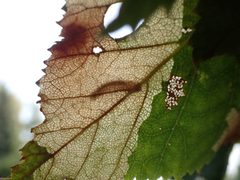
Larvae are obligate leaf miners, feeding on parenchyma tissue between upper and lower leaf . plants recorded in Salicaceae (willows, poplars), Betulaceae (birches, alders), Rosaceae (hawthorns, cherries), and other woody dicots. Specific host associations vary by . do not feed or consume only nectar; feeding habits poorly documented.
Host Associations
- Salix - larval plantwillows; multiple
- Populus - larval plantpoplars, aspens
- Betula - larval plantbirches
- Alnus - larval plantalders
- Crataegus - larval planthawthorns
- Prunus - larval plantcherries, plums
Life Cycle
Holometabolous development with , larva, , pupa, and stages. Eggs inserted into leaf tissue, often along midrib or major . Larvae feed internally, creating serpentine or blotch mines that expand as larvae grow. Mature larvae exit mines, usually through slit in lower , and drop to ground to pupate in soil or leaf litter. as prepupal larva or pupa. Adults emerge following year to mate and oviposit on new foliage.
Behavior
Larvae are sedentary endophytic feeders, remaining within single mine until maturity. Mining pattern varies: early instars often create serpentine mines that widen to blotches in later instars. (fecal material) deposited in discrete line or scattered within mine, depending on . are weak fliers, rarely moving far from site. Mating and oviposition occur on foliage; no social or parental care.
Ecological Role
Primary consumers in forest and woodland , converting leaf to insect tissue. Leaf mining damage generally minor on healthy trees but may contribute to premature leaf abscission under heavy . Serve as prey for and other natural enemies that attack larvae within mines. Contribute to nutrient cycling through accelerated leaf drop and deposition.
Human Relevance
Minor forestry and horticultural pests; leaf mining damage usually cosmetic and economically insignificant. Occasionally reported as nuisance on ornamental trees and shrubs in urban settings. Not known to plant . Serve as indicators of forest health and biodiversity in ecological monitoring. Some used in studies of plant-insect and race formation.
Similar Taxa
- FenusiniAlso contains leaf-mining Tenthredinidae; distinguished by larval mandibular structure and wing venation details. Fenusini mines often have different pattern and epidermal feeding scars.
- TenthredininiRelated tribe with external-feeding larvae; similar in general form but with more complex wing venation and generally larger size. Ecological distinction ( vs. external feeder) is primary separator.
- CaliroiniSometimes treated as related group; Caliroa has been variously placed in Heterarthrini or separate tribe. Current places Caliroa within Heterarthrini, but historical literature may use different arrangements.
More Details
Taxonomic History
Heterarthrini has undergone repeated taxonomic revision, with boundaries between it and related tribes (particularly Fenusini and Caliroini) historically unstable. The inclusion of Caliroa within Heterarthrini reflects recent molecular and morphological studies, though some regional faunas may use alternative arrangements.
Identification Challenges
-level identification of requires specialized examination, including male genitalia dissection and detailed wing venation analysis. Larvae are more frequently encountered than adults but require rearing or molecular analysis for definitive identification. Mine provides useful but not definitive clues to species identity.