
Tenthredinini
Genus Guides
3- Lagium
- Rhogogaster
- Tenthredo(Common Sawflies)
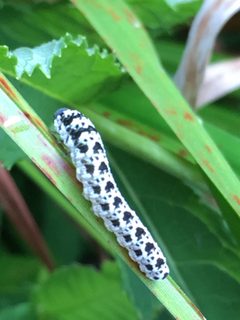
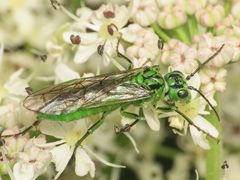
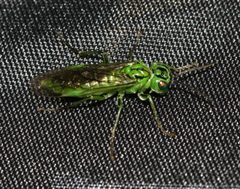
Tenthredinini is a tribe of within the Tenthredinidae, characterized by medium to large body size and often vivid coloration. The tribe includes the Tenthredo, one of the most -rich and well-known sawfly genera. Members are herbivorous as larvae, with many species feeding on diverse plants. are frequently observed visiting flowers for nectar and pollen.
Pronunciation
How to pronounce Tenthredinini: /tɛnˌθrɛdəˈnaɪnaɪ/
These audio files are automatically generated. While they are not always 100% accurate, they are a good starting point.
Identification
Tenthredinini can be distinguished from related tribes by a combination of wing venation patterns and genitalic structures. The tribe generally exhibits more robust body proportions compared to the tribe Tenthredopsini. Members of Tenthredo display striking aposematic coloration in yellow, black, and orange patterns that mimic stinging Hymenoptera. The forewing possesses a distinct anal , a characteristic shared with other Tenthredininae but with specific venation details diagnostic at tribal level.
Images
Habitat
Found in diverse terrestrial including meadows, forest edges, wetlands, and gardens. Larval habitat specificity depends on plant distribution. frequent flowering vegetation in open to semi-open environments.
Distribution
Holarctic distribution with primary diversity in the Palearctic region. The Tenthredo is widespread across Europe and Asia, with extension into North America. Genus Rhogogaster is predominantly Palearctic. Genus Lagium has limited distribution in central and eastern Asia. Genus Tyloceridius is restricted to the Oriental region.
Seasonality
activity primarily during spring and summer months, with peak varying by latitude and elevation. Most are , with adult periods concentrated from May to August in temperate regions.
Diet
Larvae feed externally on leaves of diverse angiosperm including Rosaceae, Betulaceae, Salicaceae, and herbaceous plants. Specific host associations vary by . consume nectar and pollen from flowers.
Host Associations
- Rosaceae - larval including Rubus, Fragaria, and various shrubs
- Betulaceae - larval including Betula and Alnus
- Salicaceae - larval including Salix and Populus
- Flowering plants - food sourcenectar and pollen
Life Cycle
Holometabolous development with four stages: , larva, pupa, and . Eggs are inserted into leaf tissue or deposited on leaf surfaces. Larvae feed externally on foliage, typically completing development in several weeks. occurs in soil or leaf litter within a cocoon. stage varies, with most pupal or prepupal .
Behavior
Larvae are solitary external feeders, often resting curled on leaf edges when disturbed. are and frequently observed on flowers, exhibiting slow, hovering . Many display of Hymenoptera, with corresponding -like flight patterns.
Ecological Role
Larvae function as primary consumers, defoliating plants and contributing to nutrient cycling. flower visitation supports pollination. Larvae serve as prey for and vertebrate . Some reach pest status in agricultural or horticultural settings when are high.
Human Relevance
Some cause minor defoliation damage to berry crops, roses, and ornamental plants. The conspicuous are frequently photographed and contribute to citizen science records. No sting or venom present despite warning coloration.
Similar Taxa
- TenthredopsiniSimilar overall but distinguished by more slender body form, different wing venation details, and generally less vivid coloration
- AllantiniOverlapping plant use but distinguished by larval feeding habits and genitalic
- AthaliiniSimilar flower-visiting but distinguished by larval and plant associations
Misconceptions
Despite frequent -like yellow and black coloration, Tenthredinini lack a stinger and cannot sting humans. The warning coloration represents of defensive rather than genuine aposematism.
More Details
Taxonomic history
The tribe has undergone repeated revision, with the large Tenthredo historically serving as a catch-all for diverse now distributed across multiple tribes. Modern phylogenetic studies continue to refine generic boundaries within Tenthredinini.
Research significance
Tenthredo serve as model organisms for studying mimicry complexes and plant specialization in . The tribe's relatively well-documented makes it valuable for ecological studies in the Holarctic region.