
Anoplius semicinctus
(Dahlbom, 1843)
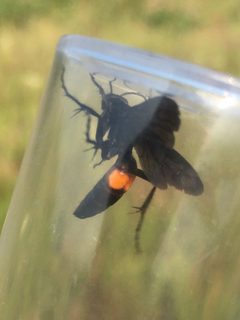
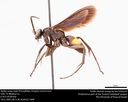
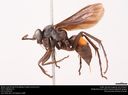
Anoplius semicinctus is a spider wasp in the Pompilidae. It is characterized by a predominantly black body with distinctive orange or red markings on the , typically appearing as spots or a band on the second tergite. The is one of many in the large Anoplius, which contains approximately 26 species in Colorado alone and roughly 100 species across North America. Like other members of its genus, it is a solitary hunter that provisions underground nests with paralyzed spiders for its larvae.
Pronunciation
How to pronounce Anoplius semicinctus: /əˈnoʊpliəs ˌsɛmɪˈsɪŋktəs/
These audio files are automatically generated. While they are not always 100% accurate, they are a good starting point.
Identification
Anoplius semicinctus can be distinguished from similar black with orange abdominal markings by several features. It has an all-black body with orange or red spots or a band on the second abdominal segment (tergite). The wings are dark with translucent tips. The body is elongate rather than robust. Females have spines on the front that can be used for identification. It is most reliably separated from the similar-looking kleptoparasitic wasp Stizoides renicinctus and the Blue-winged Wasp Scolia dubia by its more slender build and longer legs relative to body size. Unlike Scolia dubia, it lacks blue iridescent wings. Unlike Stizoides renicinctus, it is a direct hunter of spiders rather than a of other wasps' nests. It can be distinguished from other Anoplius through microscopic examination of tarsal spines and other subtle morphological features.
Images
Habitat
Open areas including fields, forest edges, meadows, and prairies. The is associated with sandy or loose soil substrates suitable for burrow excavation.
Distribution
United States: recorded from Arkansas and Vermont. The Anoplius is widespread across North America with many ; specific distribution records for A. semicinctus are sparse but the species appears to occur in eastern and central regions of the continent.
Diet
feed on nectar from flowers. Larvae are , feeding on paralyzed spiders provisioned by the female parent.
Life Cycle
Females dig burrows in soil, either creating new tunnels or utilizing pre-existing cavities. They hunt spiders, sting them into paralysis, and transport them to the burrow. A single is laid on each spider victim. The larva hatches and consumes the paralyzed spider, then pupates in the sealed burrow. Multiple may be provisioned by a single female during her lifetime.
Behavior
Solitary. Females hunt spiders and excavate burrows for nesting. They have been observed digging multiple burrows simultaneously, possibly to select optimal substrate conditions. visit flowers for nectar. The is not aggressive toward humans and does not defend colonies.
Ecological Role
of spiders, particularly wolf spiders (Lycosidae) and potentially other wandering spider . Contributes to regulation of spider . Serves as prey for larger insects and possibly birds.
Human Relevance
Generally harmless to humans; stings may occur if the is handled roughly but are not medically significant. Can be mistaken for more dangerous wasps due to its size and coloration, leading to unnecessary fear or destruction.
Similar Taxa
- Stizoides renicinctusBoth have black bodies with orange abdominal markings, but Stizoides is a kleptoparasite that raids other ' nests rather than hunting spiders directly. Stizoides has a more robust build and different wing venation.
- Scolia dubia (Blue-winged Wasp)Similar size and orange abdominal banding, but Scolia has distinctive blue iridescent wings and a more robust, less elongate body. Scolia preys on scarab beetle larvae (white ) rather than spiders.
- Anoplius atroxAnother large black spider wasp with orange markings; microscopic examination of morphological features is required for definitive separation.
- Mydas clavatusA large fly that mimics spider wasps in appearance, including black body with orange markings. Has only one pair of wings ( have two), and lacks the narrow petiole (wasp waist) of Hymenoptera.
- Poecilopompilus algidusMimics paper wasps in the south and Anoplius in the north; can have similar black-and-red coloration but has different tarsal spine characteristics and margin shape.