
Dipogon sayi
Banks, 1941
spider wasp
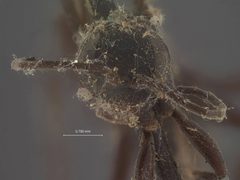
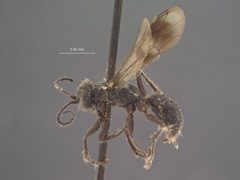
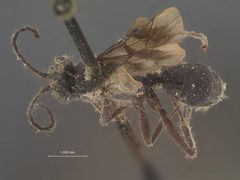
Dipogon sayi is a solitary spider wasp in the Pompilidae that nests in pre-existing cavities (trap-nests). It is known from the northeastern United States, with the easternmost records from Maine. The provisions its nests with paralyzed spiders, particularly crab spiders (Thomisidae), as food for its larvae.
Pronunciation
How to pronounce Dipogon sayi: //ˌdɪpoʊˈɡɒn ˈseɪaɪ//
These audio files are automatically generated. While they are not always 100% accurate, they are a good starting point.
Images
Habitat
Strip-clearcut areas of spruce-fir-mixed hardwood forest; uses pre-existing cavities including trap-nests and abandoned wood-boring tunnels
Distribution
Northeastern United States: Wisconsin, Vermont, Maine (easternmost U.S. records from Moosehorn National Wildlife , Washington County, Maine)
Diet
Spiders: specifically documented prey includes females of Misumena vatia, Xysticus emertoni, X. punctatus, and juveniles and males of Xysticus sp. ( Thomisidae)
Host Associations
- Misumena vatia - prey ( females)crab spider
- Xysticus emertoni - prey ( females)new prey record; crab spider
- Xysticus punctatus - prey ( females)crab spider
- Xysticus sp. - prey (juveniles and males)crab spider
Life Cycle
Solitary nesting in pre-existing cavities; female provisions nest with paralyzed spiders, lays on prey, and constructs partitions
Behavior
Uses trap-nests for nesting; no evidence of nest-site competition with eumenid when available nesting sites range from 320 to 4400
Ecological Role
of spiders; potential agent contributing to spider
Similar Taxa
- Dipogon calipterusSame ; distinguished by reddish front legs in D. calipterus and different wing banding patterns
- Other Dipogon species-level identification requires examination of hairy maxillary palps (the 'beard'), which is the only sure diagnostic feature for Dipogon but rarely visible in live field specimens
Sources and further reading
- BugGuide
- GBIF taxonomy match
- NCBI Taxonomy
- Catalogue of Life
- From Caterpillars to Butterflies to Chronic Pain Research | Bug Squad
- Bruce Hammock: From ResearchIng Insect Science to Researching Autism and Schizophrenia | Bug Squad
- Bug Eric: Spider wasp, Dipogon calipterus
- Bug Eric: Stop Saying the Monarch is a "Gateway Species" for an Appreciation of Other Insects
- Bug Eric: Another Discovery
- Bug Eric: Spider Sunday: Funnel-web Wolf Spiders
- Biology of Dipogon Sayi Banks (Hymenoptera, Pompilidae) in Trap-Nests in Wisconsin
- Habitats and Spider Prey of <i>Dipogon Sayi Sayi</i> (Hymenoptera: Pompilidae) in Washington County, Maine