
Mesostenus gracilis
Cresson, 1864
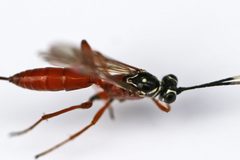
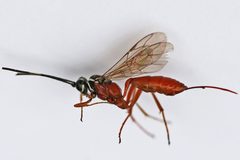
Mesostenus gracilis is a small ichneumon in the Ichneumonidae, first described by Cresson in 1864. The is a wasp known to attack caterpillars of several families, particularly those that bore into stems, shoots, or bark. It has been recorded from Canada and the United States, with observations in sunflower fields and other . The species is one of approximately ten Mesostenus species occurring in North America north of Mexico.
Pronunciation
How to pronounce Mesostenus gracilis: //ˌmɛsəˈstiːnəs ˈɡræ.sɪ.lɪs//
These audio files are automatically generated. While they are not always 100% accurate, they are a good starting point.
Identification
Females possess a long, tail-like ovipositor used for inserting into caterpillars; males lack this structure. The is boldly marked in black, white, and red. Body length ranges approximately 6-13 millimeters. Specific diagnostic features distinguishing M. gracilis from other Mesostenus species are not well documented in available sources.
Images
Habitat
Observed in sunflower fields and associated with sunflowers (Helianthus spp.) where feed on extrafloral . Also recorded in association with prickly-pear cacti (Opuntia spp.) and trees hosting boring caterpillars.
Distribution
Recorded from Canada (Lethbridge, Alberta; Swan River, Manitoba; midcentral sunflower fields) and the United States (Hawaii, Colorado).
Diet
feed on nectar from extrafloral of sunflowers. Larvae are that develop inside caterpillars.
Host Associations
- Euzophera semifuneralis - American Plum Borer; caterpillars feed beneath bark of trees
- Homoeosoma electella - Sunflower Moth; caterpillars feed on sunflower
- Acrobasis spp. - Stem-boring and shoot-boring caterpillars in Pyralidae
- Plodia interpunctella - Indianmeal Moth; stored product pest in Pyralidae
- Crambidae - of whose caterpillars are parasitized
- Tortricidae - of whose caterpillars are parasitized
Life Cycle
Complete with , larval, pupal, and stages. Females use the ovipositor to insert eggs into caterpillars. Larvae develop internally within the host, eventually killing it. Specific details of development time and stage are not documented.
Behavior
are persistent foragers at extrafloral despite interference from ants, which attempt to drive off competing insects. Females actively search for caterpillars in stems, shoots, and beneath bark.
Ecological Role
of caterpillars, contributing to natural suppression of herbivorous insect including agricultural pests such as the sunflower moth and stored product pests.
Human Relevance
agent for agricultural and stored product pests. Valuable for programs targeting caterpillars that damage crops and stored goods.
Similar Taxa
- Mesostenus sicariusAlso found in Colorado and associated with cacti; differs in plant association
- Other Mesostenus speciesApproximately ten in North America north of Mexico; most require detailed examination for identification
Sources and further reading
- BugGuide
- GBIF taxonomy match
- iNaturalist taxon
- NCBI Taxonomy
- Catalogue of Life
- Grasshopper Collections and Survey
- Grasshoppers of Colorado
- Bug Eric: Wasp Wednesday: Mesostenus
- Bichos Argentinos #2 – Pseudomyrmex sp. | Beetles In The Bush
- Traffic Jam Treehoppers | Beetles In The Bush
- Why two prehistoric sharks found in Ohio got new names