
Mesostenus sicarius
Townes, 1962
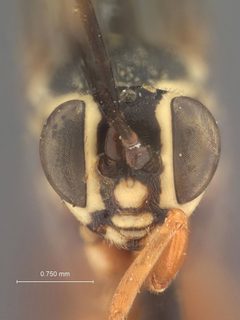
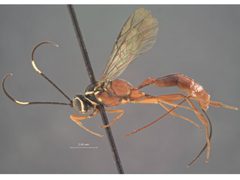
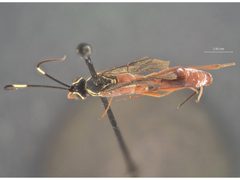
Mesostenus sicarius is a small ichneumon (6–13 mm) in the Cryptinae, described by Townes in 1962. The is closely associated with cacti in the Opuntia (prickly-pear), where it parasitizes stem-boring or shoot-boring caterpillars. Females possess a long, tail-like ovipositor used to deposit in concealed ; males lack this structure. The species has been documented in Colorado and Alberta, Canada.
Pronunciation
How to pronounce Mesostenus sicarius: /mɛˈsɒstɛnəs sɪˈkɛəriəs/
These audio files are automatically generated. While they are not always 100% accurate, they are a good starting point.
Identification
Distinguished from other Mesostenus by its close association with Opuntia cacti and the specific caterpillars it parasitizes. The bold black, white, and red coloration is conspicuous among small ichneumonids. Females are readily separated from males by the presence of the long ovipositor. Differentiation from other Mesostenus species requires examination of morphological details not described in available sources.
Images
Appearance
Small measuring 6–13 mm in length. Body boldly patterned in black, white, and red. Females possess an elongated, tail-like ovipositor extending from the tip. Males lack an ovipositor and have a more tapered abdominal terminus. long and multi-segmented, typical of ichneumonids.
Habitat
Strongly associated with prickly-pear cactus (Opuntia spp.) . Observed visiting sunflower extrafloral in Colorado during drought conditions, though this appears to be facultative feeding rather than indicative of primary habitat.
Distribution
Documented from Colorado, USA and Lethbridge, Alberta, Canada. The Mesostenus contains ten in North America north of Mexico, with approximately four species occurring in Colorado.
Diet
have been observed feeding on extrafloral nectar secreted by sunflowers (Helianthus spp.). Larvae are that develop internally within caterpillars.
Host Associations
Life Cycle
Females use the long ovipositor to insert into concealed caterpillar boring within cactus stems or shoots. Larvae develop as internal , eventually killing the host. Specific details of and are not documented.
Behavior
are persistent nectar foragers despite aggressive interference from ants defending sunflower extrafloral . Constant movement and evasive when disturbed by ants makes observation and photography difficult.
Ecological Role
of stem-boring and shoot-boring caterpillars, potentially contributing to of herbivorous insects in cactus . May incidentally visit flowers for nectar, though ants largely exclude from these resources.
Human Relevance
No direct economic importance documented. Like many ichneumonid , it may be underappreciated for its role in natural . The female ovipositor is frequently mistaken for a stinger by observers, causing unnecessary alarm.
Similar Taxa
- Mesostenus gracilisAlso occurs in Colorado and parasitizes concealed caterpillars such as the American Plum Borer (Euzophera semifuneralis); distinguished by associations and morphological details requiring expert examination
- Other Mesostenus speciesTen occur in North America north of Mexico; many are poorly known and require taxonomic expertise to distinguish
Misconceptions
The female ovipositor is commonly mistaken for a venomous stinger. It is not used for defense but for depositing in concealed insects.
More Details
Taxonomic History
Described by Townes in 1962. The was revised by Cushman in 1929, though this predates the description of M. sicarius.
Host Knowledge Gaps
associations are documented for only a few Mesostenus . Rearing caterpillars from Opuntia and related plants may yield new host records for this poorly known .