
Microctonus
Wesmael, 1835
Species Guides
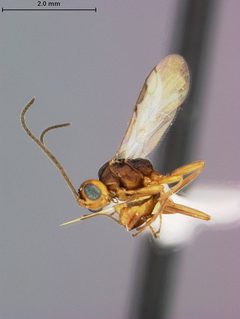
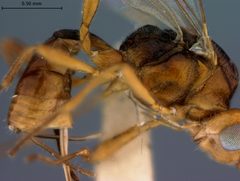
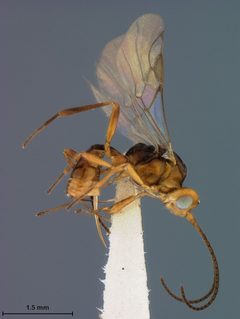
1Microctonus is a of braconid in the Euphorinae. are endoparasitoids of beetles, primarily targeting weevils (Curculionidae) and flea beetles (Chrysomelidae). The genus contains approximately 31 species in North America and additional species globally, including several used as agents. Notable biocontrol species include M. aethiopoides and M. hyperodae, introduced to New Zealand to control forage pests, and M. aethiops and M. vittatae, used in North American agricultural systems. Many species exhibit parthenogenetic , with M. hyperodae showing arrhenotokous (males produced parthenogenetically).
Pronunciation
How to pronounce Microctonus: /miːˈkɹɒktənəs/
These audio files are automatically generated. While they are not always 100% accurate, they are a good starting point.
Images
Habitat
Agricultural grasslands, pastures, and lucerne (alfalfa) crops. Associated with supporting weevil , including modified native grasslands.
Distribution
Widespread in North America (31+ documented); Europe; introduced in New Zealand for . GBIF records indicate presence in Denmark and Norway.
Seasonality
Activity synchronized with . In temperate regions, multiple per year are common. Microctonus vittatae shows four generations annually in Manitoba, with fourth-generation larvae entering in September–October. Microctonus sp. in Brazil shows peak February–June.
Host Associations
- Sitona discoideus - primary target of M. aethiopoidesforage pest, Curculionidae
- Listronotus bonariensis - primary target of M. hyperodaeArgentine stem weevil, Curculionidae
- Hypera postica - of M. aethiops and M. aethiopoidesalfalfa weevil, Curculionidae
- Phyllotreta cruciferae - of M. vittataeflea beetle, Chrysomelidae
- Phyllotreta striolata - of M. vittataeflea beetle, Chrysomelidae
- Cyrtomon luridus - of Microctonus sp.Curculionidae, Brazil
- Stelidota geminata - of M. nitidulidissap beetle, Nitidulidae
Life Cycle
Endoparasitoid of beetles. First-stage larvae overwinter within adults in diapausing . -to-adult development approximately 22.4 days at 25°C (12.7 days egg-pupal, 10.7 days pupal-adult). Multiple adults may emerge from a single host (4.7–14.2 individuals reported). Facultative in some species regulated by and temperature.
Behavior
Arrhenotokous observed in some , with males produced parthenogenetically and females from fertilized . Sex ratios under natural conditions often female-biased (0.57–0.69 female). Venom complement includes 82+ candidate involved in immune suppression, nutrient acquisition, and egg protection.
Ecological Role
agent targeting stages of pests in agricultural systems. levels can reach 40–54% under favorable conditions. Potential non-target effects on native weevil have been documented in New Zealand.
Human Relevance
agent for management of weevil pests in pastures, alfalfa, and other crops. M. aethiopoides and M. hyperodae introduced to New Zealand for control of Sitona discoideus and Listronotus bonariensis. Strain hybridization between Moroccan and European of M. aethiopoides has reduced biocontrol efficacy. M. hyperodae populations are declining in some regions, with genomic studies investigating mechanisms of failure.
Sources and further reading
- BugGuide
- GBIF taxonomy match
- iNaturalist taxon
- NCBI Taxonomy
- Contributions to the classification of North American Microctonus (Braconidae, Euphorinae)
- Curculionoidea (Insecta: Coleoptera) of New Zealand agricultural grassland and lucerne as potential non‐target hosts of the parasitoids Microctonus aethiopoides Loan and Microctonus hyperodae Loan (Hymenoptera: Braconidae)
- Host Influence on the Laboratory Production of the Parasitoid, Microctonus aethiops (Nees) 12
- Establishment and Phenology of the Parasitoid Microctonus hyperodae (Hymenoptera: Braconidae) in New Zealand
- COLOUR VARIABILITY AMONG FEMALES OFMICROCTONUS VITTATAE(HYMENOPTERA: BRACONIDAE)
- Microctonus vittatae, a Parasite of Adult Flea Beetles, and Observations on Hosts
- Some Host-Parasite Relationships of Microctonus nitidulidis1 and Stelidota geminata23
- Biology of Microctonus aethiopoides , 1 a Parasite of the Alfalfa Weevil, Hypera postica , 2 in Ontario 3
- Studies on the Taxonomy and Biology of the Euphorinae (Hymenoptera: Braconidae). II. Host Relations of Six Microctonus Species
- The parthenogenesis mechanism and venom complement of the parasitoid wasp Microctonus hyperodae , a declining biocontrol agent
- FACTORS AFFECTING FACULTATIVE DIAPAUSE OFMICROCTONUS VITTATAE(HYMENOPTERA: BRACONIDAE)
- Negative effects of strain hybridisation on the biocontrol agent <i>Microctonus aethiopoides</i>
- Dispersal Following Establishment in Michigan of Microctonus aethiops , 1 a Parasitoid of Adult Alfalfa Weevils 23
- Biology of Microctonus sp. (Hymenoptera: Braconidae), a parasitoid of Cyrtomon luridus BOH. (Coleoptera: Ccurculionidae)
- <i>Microctonus hyperodae</i> in Otago and Southland
- Using Genomic Data to Infer Evolutionary Processes in the Asexual Parasitoid Microctonus aethiopoides.