
Sitona
Germar, 1817
Species Guides
8- Sitona aquilonius
- Sitona californius
- Sitona cockerelli
- Sitona cylindricollis(sweetclover weevil)
- Sitona hispidulus(Clover Root Curculio)
- Sitona lepidus(clover root weevil)
- Sitona lineatus(pea leaf weevil)
- Sitona lineellus(alfalfa curculio)
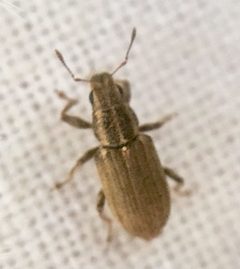
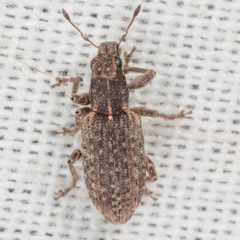
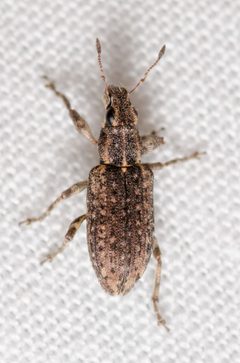
is a large of weevils in the Curculionidae comprising over 100 described . The genus is native to the Nearctic and Palaearctic regions, with some species introduced to Australasia and South Africa. Members are specialized feeders on legumes (Fabaceae), with larvae feeding on root nodules and feeding on foliage. Several species are significant agricultural pests of legume crops including peas, lentils, chickpeas, fava beans, clover, and alfalfa.
Pronunciation
How to pronounce Sitona: /sɪˈtoʊnə/
These audio files are automatically generated. While they are not always 100% accurate, they are a good starting point.
Identification
Distinguished from related by the combination of flat, recumbent mandibular , absence of an oval mandibular scar, short and broad rostrum with deep groove, and dense body scaling. -level identification requires examination of genitalia and other fine morphological characters.
Images
Habitat
Associated with leguminous plants (Fabaceae) in agricultural fields, grasslands, and open disturbed . Larvae occur in soil around plant roots.
Distribution
Native to the Nearctic and Palaearctic regions. Introduced established in South Africa, Australia, and New Zealand.
Seasonality
of some overwinter outside of crop fields and migrate into fields in late spring to lay . Adults re-emerge in summer after larval development and . Activity patterns vary by species and region.
Diet
Specialized on Fabaceae. Larvae feed on root nodules and root tissue, including containing nitrogen-fixing bacteria. feed on leaves, typically causing small notches along leaf margins.
Host Associations
- Fabaceae (legumes) - primary plants-level specialization; includes peas, lentils, chickpeas, fava beans, clover, alfalfa, vetches, trefoils
Life Cycle
Complete . laid in soil near plants. Larvae burrow into soil and feed on root nodules and roots, progressing from nodules to root cortex. occurs underground. emerge and feed on foliage. stage varies by ; some adults overwinter outside crop fields.
Behavior
of some exhibit migratory , moving from sites into crop fields in spring. Larval feeding is cryptic and occurs underground.
Ecological Role
Herbivore specialized on nitrogen-fixing legumes. Larval feeding on root nodules disrupts plant nitrogen fixation. Serves as prey for including weevil wasps (Cerceris spp.). Target of programs using (Microctonus aethiopoides).
Human Relevance
Several are important agricultural pests causing yield losses in legume crops. Sitona lineatus (pea leaf weevil) and Sitona hispidulus (clover root curculio) are particularly damaging. Larval feeding reduces stand establishment, , and longevity; feeding damages foliage. Synergistic damage with plant can increase yield losses. Management is complicated by lack of registered targeting larvae, absence of , and cryptic larval . using has been implemented in some regions.
Similar Taxa
- Hypera postica (alfalfa weevil)Both are weevil pests of alfalfa and clover; distinguished by mandibular , rostrum shape, and larval feeding on root nodules rather than above-ground plant parts
More Details
Plant defense interactions
Research on Sitona lineatus demonstrates that the order of pest attack affects plant defense responses. When pea leaf weevils feed before pea aphids, they enhance anti- defenses against pea enation mosaic virus; when they feed after aphids, anti-pathogen defenses are suppressed.
Conservation significance
Some support endangered . Sitona cinerascens (Morley weevil) is a rare species in Britain that serves as prey for the endangered 5-banded weevil wasp (Cerceris quinquefasciatus), which in turn is parasitized by the endangered ruby-tailed Hedychrum niemalei.
Sources and further reading
- BugGuide
- Wikipedia
- GBIF taxonomy match
- iNaturalist taxon
- NCBI Taxonomy
- Catalogue of Life
- Sitona lineatus Archives - Entomology Today
- Sitona hispidulus Archives - Entomology Today
- Clover Root Curculio: Historic Perspectives Guide Modern Management
- Complexity Untangled: For Plant Defenses, Pest Attack Order Matters
- Britain’s First Bug Reserve – is OPEN - Buglife Blog - Buglife
- Bug Eric: Wasp Wednesday: Cerceris sextoides
- Methods to distinguish between the <i>Microctonus aethiopoides</i> strains that parasitise <i>Sitona lepidus</i> and <i>Sitona discoideus</i>
- Host Specificity of Sitona Beetles
- The literature of arthropods associated with alfalfa: II. A bibliography of the Sitona species (Coleoptera: Curculionidae)
- Sitona hispidulus . [Distribution map].
- Sitona discoideus . [Distribution map].
- From fields to landscapes: pheromone trapping and feeding damage of Sitona lineatus (Coleoptera: Curculionidae) during range expansion in Canadian pulse crops.