
Listronotus
Jekel, 1865
Species Guides
37- Listronotus anthracinus(underwater weevil)
- Listronotus appendiculatus(underwater weevil)
- Listronotus blatchleyi
- Listronotus caudatus
- Listronotus cryptops(underwater weevil)
- Listronotus debilis
- Listronotus delumbis(underwater weevil)
- Listronotus dietzi
- Listronotus distinctus(underwater weevil)
Listronotus is a of weevils in the Curculionidae containing at least 100 described . The genus includes several economically significant agricultural pests, notably the carrot weevil (L. oregonensis), (L. maculicollis), and Argentine stem weevil (L. bonariensis), as well as agents such as L. setosipennis used against weeds. Species in this genus exhibit diverse associations ranging from cultivated Apiaceae crops to pasture grasses and invasive weeds.
Pronunciation
How to pronounce Listronotus: /ˌlis.trəˈnoʊ.təs/
These audio files are automatically generated. While they are not always 100% accurate, they are a good starting point.
Identification
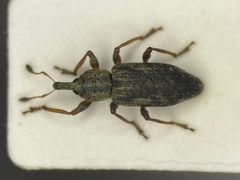
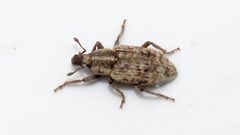
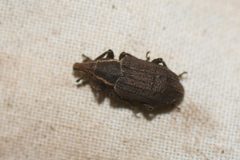
Listronotus are small weevils, typically under 5 mm in length. The carrot weevil (L. oregonensis) is approximately 4 mm long, while the (L. maculicollis) reaches at most 4.5 mm. As curculionids, they possess the characteristic elongated rostrum with mouthparts at the tip. Species-level identification requires examination of specific morphological features not detailed in available sources.
Images
Habitat
vary by : L. oregonensis occurs in agricultural fields with organic and mineral-rich soils, avoiding sandy substrates; L. maculicollis inhabits golf course turfgrass and managed grasslands; L. bonariensis is found in pasturelands and cereal crops; L. setosipennis occupies areas infested with Parthenium hysterophorus. typically reside in the top layer of soil where crops have been grown.
Distribution
The has a broad distribution encompassing North America, South America, New Zealand, Australia, and parts of Africa and Asia. Specific distributions vary by : L. oregonensis occurs in the eastern United States and southeastern Canada; L. maculicollis is found in eastern North America; L. bonariensis is native to South America (Argentina, Bolivia, Brazil, Chile, Uruguay) and introduced to Australia and New Zealand; L. setosipennis has been introduced to Ethiopia and Uganda for ; L. dauci occurs in Argentina.
Seasonality
Activity patterns vary by and climate. L. maculicollis shows peak activity at temperatures between 14-17°C, with seasonal shifts in daily activity timing— in spring, early morning in summer. L. oregonensis emerge from sites when crops emerge. L. dauci begins damaging crops from September in Córdoba, Argentina, and overwinters as adults. L. setosipennis emerges from soil during rainy seasons following dry season dormancy in East Africa.
Host Associations
- Daucus carota (carrot) - primary L. oregonensis, L. dauci, L. texanus
- Apium graveolens (celery) - L. oregonensis
- Petroselinum crispum (parsley) - L. oregonensis, L. latiusculus
- Poa annua (annual bluegrass) - primary L. maculicollis
- Lolium perenne (perennial ryegrass) - L. bonariensis
- Parthenium hysterophorus - L. setosipennis; used for
- Various Poaceae (grasses) - L. bonariensis
Life Cycle
Complete with four life stages. L. dauci completes development in 39-44 days at 24°C: hatch in 10-12 days, larval development spans 10-16 days, and lasts 5-9 days. L. oregonensis larvae pass through four instars while tunneling through plant crowns toward roots. L. bonariensis exhibits major fluctuations in stage densities across seasons. occurs as in soil for multiple .
Behavior
L. oregonensis are capable of but primarily walk when dispersing, even for to new fields. They show strong negative response to sandy soils, moving away rapidly. L. maculicollis activity is driven more by temperature than light cycles, with at 14-17°C. L. setosipennis demonstrates seasonal from soil following dry periods. selection involves female assessment of plant suitability for oviposition.
Ecological Role
Herbivores with variable impacts: some function as significant agricultural pests causing crop losses and plant mortality through larval tunneling, while others serve as agents against weeds. L. bonariensis is a major pasture pest in New Zealand. L. setosipennis contributes to suppression of Parthenium hysterophorus in East Africa. Ground beetles (Carabidae) and (Mymaridae) act as natural enemies of some species.
Human Relevance
Multiple are economically important pests. L. oregonensis is described as the most damaging insect pest to carrot growers in Ontario. L. maculicollis is the single most destructive insect pest of golf course turfgrass in eastern North America. L. bonariensis causes significant losses in pasture and cereal production. Management relies heavily on foliar , crop , and emerging methods including . L. setosipennis has been deliberately introduced for of Parthenium weed in Ethiopia and Uganda.
Similar Taxa
- HyperodesL. maculicollis was formerly classified as Hyperodes sp. near anthracina-anthracinus; historical taxonomic confusion
- Other CurculionidaeSmall size and plant-associated habits require careful morphological examination for -level identification
More Details
Biological Control Potential
show promise for management of L. oregonensis, with Steinernema carpocapsae achieving 88% mortality in sandy soil and Heterorhabditis bacteriophora 81% in muck soil under laboratory conditions. However, field application remains limited by cost and constraints.
Research Gaps
Behavioral of Listronotus remains poorly understood, including mate-finding mechanisms, preferences among cultivars versus wild plants, and patterns between sites and new fields. No attractants, repellents, or have been identified for management use.
Sources and further reading
- BugGuide
- Wikipedia
- GBIF taxonomy match
- iNaturalist taxon
- NCBI Taxonomy
- Catalogue of Life
- Listronotus setosipennis - Entomology Today
- carrot weevil - Listronotus oregonensis - Entomology Today
- annual bluegrass weevil - Listronotus maculicollis - Entomology Today
- Glowing on the Golf Course: Fluorescent Imaging Reveals Turfgrass Pest's Most Active Period
- New Guide Offers Latest in Carrot Weevil Management
- Two Insects Lead the Fight Against Destructive Invasive Weed—But There's Still More to Be Done
- Listronotus bonariensis . [Distribution map].
- Grass Host Preferences of Listronotus bonariensis (Coleoptera: Curculionidae)
- Biology and Management of the Annual Bluegrass Weevil, Listronotus maculicollis (Coleoptera: Curculionidae)
- Observaciones sobre el ciclo biológico y comportamiento de Listronotus dauci (Brethes) (Coleoptera-Curculionidae) en cultivos de zanahoria en Córdoba (Argentina) Observations on the life cycle and behavior of Listronotus dauci (Brethes) (Coleoptera-Curculionidae) in carrot crops in Córdoba (Argentina).
- A Study of the Biology of the Parsley Stalk-Weevil Listronotus Latiusculus Boheman Coleoptera: Curculionidae
- Biology of a Carrot Weevil, Listronotus texanus (Coleoptera: Curculionidae): Range and Seasonality of Infestations
- The bionomics ofListronotus bonariensis(Coleoptera: Curculionidae) in Canterbury, New Zealand
- Flight Behavior of Listronotus bonariensis (Coleoptera: Curculionidae) in the Waikato, New Zealand
- The genome and stage-specific transcriptomes of the carrot weevil, Listronotus oregonensis, reveal adaptive mechanisms for host specialisation and symbiotic interactions.