
Longistigma
Wilson, 1909
giant bark aphid
Species Guides
1- Longistigma caryae(Giant Bark Aphid)
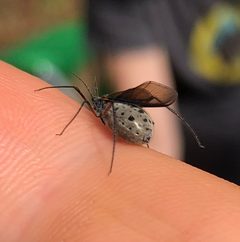
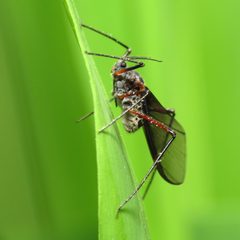
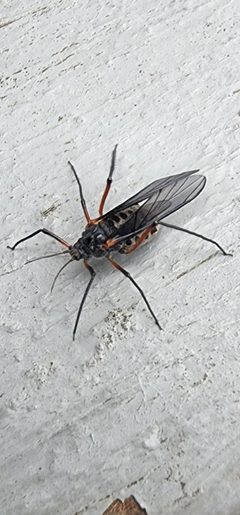
Longistigma is a of giant aphids in the Aphididae, containing at least three described . These are the largest aphids in North America, with Longistigma caryae (giant bark aphid) being particularly notable for its size. The genus was established by Wilson in 1909 based on the extremely long, slender stigma that extends around the end of the wing. Members of this genus feed on bark and are associated with trees including oak, hickory, walnut, and beech.
Pronunciation
How to pronounce Longistigma: //lɔːn.dʒɪˈstɪɡ.mə//
These audio files are automatically generated. While they are not always 100% accurate, they are a good starting point.
Identification
Distinguished from other by the extremely elongated stigma that curves around the wing tip, the characteristic that gave the genus its name. are notably large for aphids, with some individuals reaching sizes far exceeding typical aphid dimensions. Winged and wingless morphs occur within colonies. The combination of large body size, bark-feeding habit on hardwood trees, and distinctive wing venation with elongated stigma separates Longistigma from other Lachninae.
Images
Habitat
Associated with bark of hardwood trees including oak (Quercus), hickory (Carya), walnut (Juglans), and beech (Fagus). Found on branches and trunks of mature trees, often on leafless branches during late autumn and winter.
Distribution
North America; records from Massachusetts, Illinois, and other eastern and central United States. One , Longistigma xizangensis, described from Tibet (Xizang), China.
Seasonality
Active during growing season; colonies observed into late autumn. occurs as deposited on branches. In late autumn, females switch from to laying eggs that persist through winter and hatch when trees become sappy in spring.
Diet
Phloem sap from bark of hardwood trees. Feeding occurs on branches through elongated mouthparts.
Host Associations
- Carya glabra - pignut hickory; original description
- Quercus - oak
- Juglans - walnut
- Fagus - beech
Life Cycle
is parthenogenetic and during the growing season, with females giving birth to live nymphs. As temperatures decline in autumn, females transition to oviparity, depositing on branches by the thousands. Eggs serve as the stage, changing from amber to black as they age. Eggs hatch in spring when trees resume sap flow.
Behavior
Forms colonies on bark of trees. Engages in mutualistic relationships with ants, which tend the aphids and receive honeydew in exchange for protection from and . This has been observed in multiple countries.
Ecological Role
Primary consumer feeding on plant phloem; converts plant sap into that supports mutualists and other consumers. Honeydew production provides energy source for ants and potentially other insects. Serves as prey for various and , though ant attendance provides protection.
Human Relevance
Primarily of ecological and entomological interest due to remarkable size. Not considered a major economic pest, though heavy may occur. Subject of natural history observation and educational interest, particularly around holiday seasons when colonies are visible on leafless trees.
Similar Taxa
- TuberolachnusTuberolachnus salignus (giant willow aphid) is comparable in large size and bark-feeding habit, but occurs on willow (Salix) rather than hardwood trees, and lacks the elongated stigma characteristic of Longistigma
- CinaraOther large aphids in Lachninae, but distinguished by associations, body proportions, and wing venation details
More Details
Etymology
name refers to the extremely long, slender stigma that extends around the end of the wing, the diagnostic character used by Wilson (1909) to establish the genus
Species diversity
At least three described : Longistigma caryae (North America), Longistigma liquidambarus (described from Japan, 1925), and Longistigma xizangensis (Tibet, 1981)
Reproductive biology
Like many aphids in tribe Lachnini, is entirely parthenogenetic without males observed. The seasonal shift from viviparity to -laying is triggered by environmental cues associated with declining temperatures and
Sources and further reading
- BugGuide
- Wikipedia
- GBIF taxonomy match
- iNaturalist taxon
- NCBI Taxonomy
- Catalogue of Life
- ‘Twas two weeks before Christmas – Giant bark aphids, Longistigma caryae and giant willow aphids, Tuberolachnus salignus — Bug of the Week
- ‘Twas the week before Christmas: Giant bark aphids, Longistigma caryae, and giant willow aphids, Tuberolachnus salignus — Bug of the Week
- 'Twas two weeks after Christmas - Giant bark aphids, Longistigma caryae — Bug of the Week
- ‘Twas the week before Christmas: Giant bark aphids, Longistigma caryae, and giant willow aphids, Tuberolachnus salignus — Bug of the Week
- Archive — Bug of the Week
- Giant Bark Aphid, Longistigma caryae (Harris) (Insecta: Hemiptera: Aphididae)