
Tuberolachnus
Mordvilko, 1909
giant willow aphid, giant bark aphid
Species Guides
1- Tuberolachnus salignus(Giant Willow Aphid)
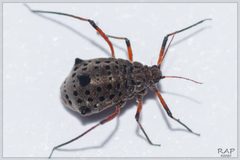
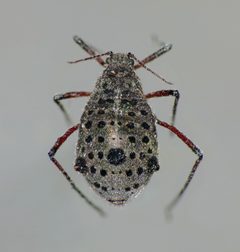
Tuberolachnus is a of aphids in the Aphididae, established by Mordvilko in 1909. The genus contains three described , with Tuberolachnus salignus (the giant willow aphid) being the most well-known and widely studied. Members of this genus are among the largest aphids in the world, with body lengths reaching up to 5.8 mm. They are notable for their obligate parthenogenetic , extremely low genetic diversity, and status as pests in multiple regions including New Zealand, India, and Patagonia.
Pronunciation
How to pronounce Tuberolachnus: /tʊˌbɛroʊˈlæknəs/
These audio files are automatically generated. While they are not always 100% accurate, they are a good starting point.
Images
Habitat
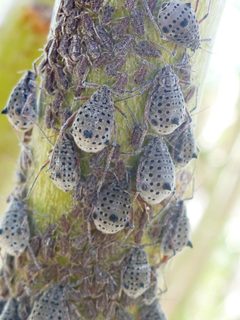
Associated with woody plants including willows (Salix spp.), poplars (Populus spp.), beech, oak, hickory, walnut, and apple (Malus domestica). Found on stems and branches of host trees, often forming dense colonies.
Distribution
Widely distributed across temperate regions of the Northern Hemisphere including Europe, North America, and Asia. established in New Zealand (first reported 2013), Patagonia, and Kashmir, India. GBIF records indicate presence in Denmark, Norway, and Sweden.
Seasonality
In temperate regions, active from spring through autumn. In late autumn, colonies switch from to oviposition, laying on branches. In New Zealand, observed on willows from late September to late November, then reappearing in late December and remaining until leaf fall.
Diet
Phloem feeder on woody plants. Uses long stylets to extract sap from plant stems and branches.
Host Associations
- Salix spp. - primary willows
- Populus spp. - poplars
- Malus domestica - apple; recently documented in Kashmir, India and New Zealand
- Fagus spp. - beech
- Quercus spp. - oak
- Carya spp. - hickory
- Juglans spp. - walnut
Life Cycle
Obligate with no sexual known. Reproduces viviparously during the growing season, with females giving birth to live nymphs. In autumn, switches to oviposition, laying that hatch the following spring. (winged) and (wingless) occur in colonies.
Behavior
Ecological Role
pest with significant economic and ecological impacts. Heavy cause plant damage including yellowing leaves, stunted growth, reduced fruit production, and growth from honeydew deposition. Honeydew production alters soil biota and biochemical properties, increasing microbial , soil respiration, and mesofauna abundance. Supports elevated of invasive social (Vespula spp.) through provision. Complex cascading effects involving multiple .
Human Relevance
Significant agricultural and apicultural pest. on apple trees reduce fruit production and tree vigor. Honeydew collected by honeybees causes honey crystallization in combs and affects health due to elevated melezitose content. Subject of research including specificity testing of Pauesia nigrovaria and evaluation of harlequin ladybird beetle Harmonia axyridis as . Willow cultivars grown for bioenergy production are increasingly affected.
Similar Taxa
- Longistigma caryaeAlso a giant in North America, similarly large-bodied and found on woody including oak, hickory, and beech; distinguished by host preferences and morphological details
- Cinara spp.Large aphids on conifers and woody plants; Tuberolachnus distinguished by larger body size, obligate , and specific associations with willows and poplars
- Lachnus spp.Related aphids in Lachninae; Tuberolachnus distinguished by larger size, tuberculate body form, and parthenogenetic
More Details
Genetic diversity
Exhibits extremely low clonal diversity with only 16 found in 660 specimens from 27 across five countries. Two common genotypes comprise more than half of all specimens collected, with wide geographical distribution.
Host plant resistance
Significant variation in resistance/susceptibility exists among willow and . Some clones show resistance with low reproductive performance; others are highly susceptible with extended duration and severe impacts on flowering .
Invasive spread
Rapidly expanding range through human-mediated transport and climate change. In New Zealand, spread throughout the country within years of first detection in 2013. Recently documented on apple in India represents new expansion with potential for further spread.
Sources and further reading
- BugGuide
- Wikipedia
- GBIF taxonomy match
- iNaturalist taxon
- NCBI Taxonomy
- Catalogue of Life
- ‘Twas two weeks before Christmas – Giant bark aphids, Longistigma caryae and giant willow aphids, Tuberolachnus salignus — Bug of the Week
- ‘Twas the week before Christmas: Giant bark aphids, Longistigma caryae, and giant willow aphids, Tuberolachnus salignus — Bug of the Week
- ‘Twas the week before Christmas: Giant bark aphids, Longistigma caryae, and giant willow aphids, Tuberolachnus salignus — Bug of the Week
- Archive — Bug of the Week
- Studies On the Feeding and Nutrition of Tuberolachnus Salignus (Gmelin) (Homoptera, Aphididae)
- Population genetics of Tuberolachnus salignus , an obligate parthenogenetic aphid
- Tuberolachnus salignus (Gmelin, 1790) (Hemiptera, Aphididae) on Apple (Malus domestica Borkh) in Kashmir, India
- Studies On the Feeding and Nutrition ofTuberolachnus Salignus(Gmelin) (Homoptera, Aphididae)
- Honeydew Deposition by the Giant Willow Aphid (Tuberolachnus salignus) Affects Soil Biota and Soil Biochemical Properties
- Monitoring giant willow aphid (<i>Tuberolachnus salignus</i>) on apple trees in close proximity to infested willows
- Direct and Indirect Impacts of the Tuberolachnus salignus (Hemiptera: Aphididae) Invasion in New Zealand and Management Alternatives
- Seasonal abundance of Tuberolachnus salignus and its effect on flowering of host willows of varying susceptibility
- The potential of harlequin ladybird beetle Harmonia axyridis as a predator of the giant willow aphid Tuberolachnus salignus: voracity, life history and prey preference
- Effect of willow cultivar and plant age on the melezitose content of giant willow aphid ( Tuberolachnus salignus ) honeydew
- Host selection and performance of the giant willow aphid, Tuberolachnus salignus Gmelin – implications for pest management
- Host specificity testing of Pauesia nigrovaria (Hymenoptera: Braconidae: Aphidiinae) for classical biological control of Tuberolachnus salignus (Hemiptera: Aphididae: Lachninae) in New Zealand
- Honeydew production by the giant willow aphid (Tuberolachnus salignus, Hemiptera: Aphididae) and its effect on foraging yellowjackets (Hymenoptera: Vespidae)