
Neotoxoptera
Theobald, 1915
Species Guides
1- Neotoxoptera formosana(Onion Aphid)
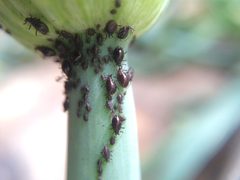
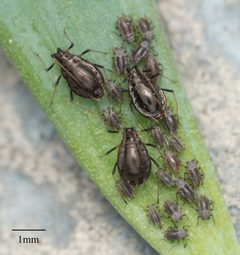
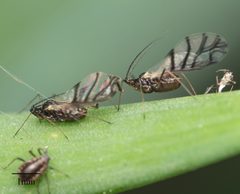
Neotoxoptera is a of aphids in the Aphididae, comprising at least seven described . The genus is best known for N. formosana, the onion , a significant agricultural pest of Allium crops. Species in this genus are oligophagous, specializing on plants in the Allium genus, and are distributed across Asia, North America, South America, Europe, Oceania, and Africa.
Pronunciation
How to pronounce Neotoxoptera: //ˌniː.əʊ.tɒkˈsɒp.tə.rə//
These audio files are automatically generated. While they are not always 100% accurate, they are a good starting point.
Images
Habitat
Associated with Allium crops and wild Allium ; agricultural fields and gardens where plants are cultivated. Specific microhabitat includes leaves, stored bulbs, and sets of onions and related species.
Distribution
Asia (China, Japan, Korea Republic, Taiwan), North America (USA: California, Colorado, Hawaii, New York, North Carolina, Pennsylvania, Utah; Mexico), South America (Brazil, Chile), Europe (Finland, Italy, UK), Oceania (Australia, New Zealand, Papua New Guinea), Africa (St Helena).
Seasonality
In Guizhou Province, China, show two main hazard peaks: March–May and July–September. Survives year-round in suitable climates.
Diet
Oligophagous; feeds on phloem sap from plants in the Allium . Documented include Allium tuberosum (garlic chive), Allium fistulosum (Welsh onion), Allium cepa (onion), leek, garlic, and shallot.
Host Associations
- Allium tuberosum - primary causes severe economic losses to agriculture in China
- Allium fistulosum - primary attracted to volatile sulfide compounds
- Allium cepa - attacks leaves, stored bulbs and sets
- Allium sativum - preferred for phloem feeding
- Allium schoenoprasum - most favorable for development and
- Allium ascalonicum - preferred for phloem feeding
Life Cycle
Developmental stages include first, second, third, and fourth-instar nymphs followed by . Threshold temperature (C) for nymphal development: 4.002°C; effective cumulative temperature (K): 145.252 days °C. Development accelerates with temperature but body size decreases; longevity and period shorten above 20°C. Optimal temperature for expansion is 20°C.
Behavior
Uses olfactory cues to locate plants, specifically responding to volatile sulfur compounds characteristic of Allium: dipropyl trisulphide (from A. fistulosum) and diallyl disulphide (from A. tuberosum). Produces from cornicles; major components include (E)-β-farnesene and (+)-limonene in natural ratio 67.8:1. Shows significant repellent response to volatile sulfides released by plants and to rosemary.
Ecological Role
Agricultural pest causing severe economic losses and quality degradation in Allium crops. Acts indirectly as a for plant viruses. Defecates sticky honeydew. Serves as prey for predatory insects including Aphidoletes aphidimyza (predatory gall midge) and Chrysoperla externa (green lacewing).
Human Relevance
Significant economic pest of Allium vegetable production worldwide, particularly threatening Chinese leek production. Subject of research focusing on -based control strategies and using lacewings. sequenced to understand specificity and develop - management strategies.
Similar Taxa
Sources and further reading
- BugGuide
- Wikipedia
- GBIF taxonomy match
- iNaturalist taxon
- NCBI Taxonomy
- Catalogue of Life
- Neotoxoptera formosana . [Distribution map].
- A chromosome-level genome assembly of Neotoxoptera formosana (Takahashi, 1921) (Hemiptera: Aphididae)
- Identification and behavioral bioassays of alarm pheromones from the onion aphid Neotoxoptera formosana
- The Effects of Temperature on Development, Reproduction, Population Dynamics and Protective Enzyme Activity of Neotoxoptera formosana (Hemiptera: Aphididae)
- Development and Reproduction of Chrysoperla Externa (Neuroptera: Chrysopidae) Fed With Neotoxoptera Formosana (Hemiptera: Aphididae)
- Onion aphid (Neotoxoptera formosana) attractants, in the headspace of Allium fistulosum and A. tuberosum leaves
- Understanding the onion aphid Neotoxoptera formosana’s (Hemiptera: Aphididae) interaction with Allium (Asparagales: Amaryllidaceae) crops: a comprehensive study of feeding patterns and life history traits