
Muscina levida
(Harris, 1780)
Dark-horned Muscina
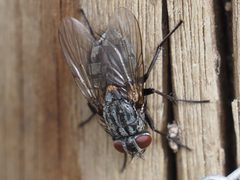
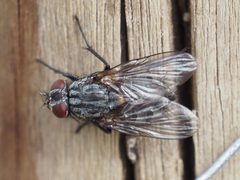
Muscina levida is a muscid fly in the Muscidae, commonly known as the Dark-horned Muscina. It is found in Europe, with records from Belgium, Denmark, Norway, and the Azores. The species is one of several Muscina flies associated with decomposing organic matter and has been observed in indoor settings during autumn and winter.
Pronunciation
How to pronounce Muscina levida: /mʊsˈkiːnə ˈlɛvɪdə/
These audio files are automatically generated. While they are not always 100% accurate, they are a good starting point.
Identification
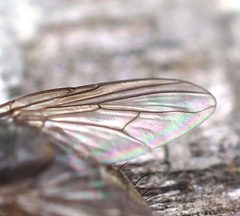
Muscina levida can be distinguished from similar Muscina by its dark . It resembles other Muscina species such as M. pascuorum and M. assimilis, which share similar body plans and preferences. Accurate identification to species level typically requires examination of genitalia or other subtle morphological features.
Images
Habitat
Associated with decomposing organic matter including fungi and carrion. Has been observed entering human dwellings in autumn and winter, likely seeking shelter. Related Muscina develop in substrates such as woodland fungi, manure, and decaying animal matter.
Distribution
Europe: recorded from Belgium, Denmark, Norway, and São Miguel in the Azores (Portugal).
Seasonality
have been observed in homes during autumn and winter months, suggesting a pattern of seeking indoor shelter as temperatures decline. Activity likely peaks in warmer months for breeding and larval development.
Diet
Larvae feed on decomposing organic matter. Related Muscina have been documented consuming fungi and carrion; specific dietary habits for M. levida larvae are presumed similar but not separately confirmed.
Life Cycle
Complete with , larva, pupa, and stages. Specific developmental details for this are not documented, but related Muscina species develop in decomposing substrates with larval periods lasting several days to weeks depending on temperature.
Behavior
Has been observed entering buildings in autumn and winter, accumulating on windowsills as individuals attempt to escape to the outdoors. This is shared with other Muscina and cluster flies (Pollenia spp.).
Ecological Role
Larvae contribute to decomposition of organic matter including fungi and carrion. May serve as prey for predatory insects and other organisms in decaying substrate .
Human Relevance
Considered a nuisance when enter dwellings in autumn and winter. Not known to bite or transmit to humans. Larvae do not parasitize living tissue.
Similar Taxa
- Muscina pascuorumSimilar size, appearance, and ; also enters homes in autumn and winter and develops in woodland fungi. Distinguished by subtle morphological features including antennal coloration.
- Muscina assimilisClosely related with similar associations and seasonal indoor occurrence. Requires detailed examination for reliable separation.
- Pollenia rudis (cluster fly)Shares autumn/winter home-invading and windowsill accumulation. Cluster flies are larger, more robust, with golden hairs on the , and have different wing venation.
More Details
Taxonomic history
The was described by Harris in 1780. Some sources cite 1788 as the publication date, reflecting historical variations in dating the original description.
Biological control context
The Muscina includes whose larvae are predatory on other fly larvae in manure, including horn fly (Haematobia irritans) larvae. It is unclear whether M. levida specifically exhibits this predatory or if this trait is more characteristic of other Muscina species such as M. stabulans.