
Polleniidae
Brauer & Bergenstamm, 1889
cluster flies
Genus Guides
1- Pollenia(cluster flies)
Polleniidae is a of calyptrate flies in the order Diptera, commonly known as "cluster flies." The family was elevated from rank within Calliphoridae to full family status in 2019 based on phylogenetic evidence. It comprises approximately 150 in eight , with Pollenia being the most diverse and widespread genus containing about 95 species. Members are primarily soil-dwelling and develop as endoparasitoids of earthworms.
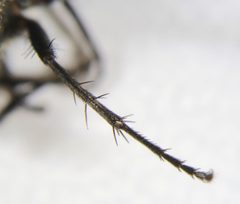
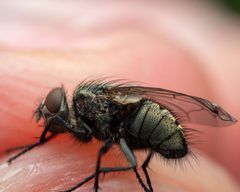
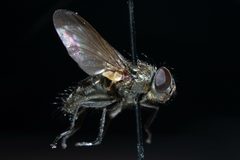
Pronunciation
How to pronounce Polleniidae: //pɒˈlɛnɪ.i.aɪdiː//
These audio files are automatically generated. While they are not always 100% accurate, they are a good starting point.
Identification
Polleniidae lack unique morphological , making -level challenging. The family was historically classified within Calliphoridae, and separation requires molecular or detailed morphological analysis. The Pollenia, which contains the majority of , is distinguished from other genera by specific character combinations detailed in taxonomic keys.
Images
Habitat
Soil-dwelling environments. Females have been observed on bark lying on the ground with wings folded, and extending the ovipositor into mixtures of loose soil and organic debris for oviposition.
Distribution
Palaearctic, Oriental, Australasian, Afrotropical, and Nearctic (introduced) regions. Absent from the Neotropical Region. -level distribution: Pollenia occurs in Palaearctic, Oriental, Australasian, and introduced to Nearctic; Dexopollenia in southeastern Palaearctic and Oriental Region; Melanodexia is Nearctic ; Morinia in Afrotropical and Palaearctic; Xanthotryxus in southeastern Palaearctic and Oriental Region; Anthracomyza in Australia; Nesodexia in Palaearctic; Alvamaja in southeastern Europe (Romania, Serbia).
Host Associations
- earthworms - endoparasitoidDocumented for several Pollenia ; most species lack natural history data
Life Cycle
Develop as endoparasitoids in earthworms. Limited natural history information is available for most .
Behavior
Females of Melanodexia and Pollenia display frenetic on ground debris with wings folded. Oviposition involves extending the ovipositor into soil and organic debris. Some , particularly in the Pollenia, are known to aggregate in buildings during autumn and winter, earning the "cluster flies."
Ecological Role
of soil-dwelling , particularly earthworms. Potential agents.
Human Relevance
Some Pollenia are perceived as pests when they aggregate in buildings during cooler months. Historical records document their presence as nuisance pests in North America since at least 1849.
Similar Taxa
- CalliphoridaePolleniidae was historically classified as Polleniinae within Calliphoridae; separation requires phylogenetic analysis or detailed morphological examination
More Details
Taxonomic History
The was elevated from rank within Calliphoridae to full family status by Cerretti et al. in 2019 based on morphological and molecular phylogenetic evidence supporting its monophyly.
Generic Boundaries
Generic boundaries within Polleniidae are considered labile pending comprehensive phylogenetic analysis. Anthracomyza and Nesodexia are tentatively assigned to the .
Species Diversity
Approximately 150 in eight : Pollenia (~95 species), Dexopollenia (21 species), Morinia (13-14 species), Melanodexia (8 species), Xanthotryxus (7 species), and the Alvamaja, Anthracomyza, and Nesodexia.
Sources and further reading
- BugGuide
- Wikipedia
- GBIF taxonomy match
- iNaturalist taxon
- NCBI Taxonomy
- Catalogue of Life
- The world Polleniidae (Diptera, Oestroidea): key to genera and checklist of species
- The history and current state of cluster flies (Diptera: Polleniidae:Pollenia) in North America, with new Canadian provincial records
- Two new species of Polleniidae (Diptera) from China.
- Three new species of Polleniidae (Diptera) from China.