
Culex
Linnaeus, 1758
typical mosquitoes
Species Guides
11- Culex coronator
- Culex erraticus(Erratic Mosquito)
- Culex nigripalpus(Florida SLE mosquito)
- Culex peccator
- Culex pipiens(common house mosquito)
- Culex quinquefasciatus(Southern House Mosquito)
- Culex restuans(White-dotted Mosquito)
- Culex salinarius(Unbanded Saltmarsh Mosquito)
- Culex stigmatosoma(Banded Foul Water Mosquito)
Culex is a diverse of mosquitoes comprising over 1,000 across more than 20 subgenera. Several species serve as important , transmitting including West Nile virus, , and St. Louis , as well as and . The genus occurs worldwide except for extreme northern temperate regions and is the most commonly encountered mosquito in many major U.S. cities. While most Culex species exhibit characteristic raft-forming -laying , at least one species, Culex antillummagnorum, has been documented with unique aerial and "barrage" oviposition strategies.
Pronunciation
How to pronounce Culex: //ˈkjuːlɛks//
These audio files are automatically generated. While they are not always 100% accurate, they are a good starting point.
Identification
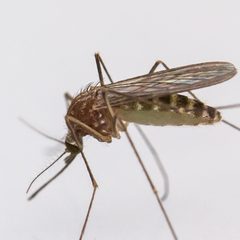
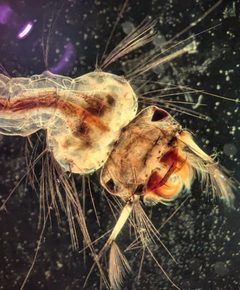
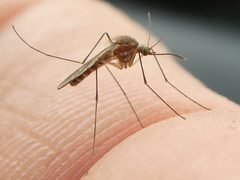
Distinguished from Anopheles mosquitoes by short female maxillary palps, clear unspotted wings, and horizontal resting posture. Culicine larvae float with low and siphon at surface, versus Anopheline larvae floating horizontally. Formal identification requires microscopic examination of morphological characters including bristle patterns and body proportions. Culex antillummagnorum uniquely identified by oval, non-raft-forming and aerial oviposition .
Images
Appearance
range from 4–10 mm depending on . Body plan typical of with distinct , , and . Forewings held horizontally over abdomen at rest; hindwings reduced to small . Females possess short maxillary palps relative to length (distinctive from Anopheles). Wings typically clear rather than spotted. Formal identification requires careful measurement of bodily proportions and examination of bristle patterns.
Habitat
Breeds in small standing freshwater bodies: puddles, pools, ditches, artificial containers (cans, buckets, tires), water storage tanks, and tree holes. Some utilize phytotelmata such as water-filled plant bracts. Culex pipiens form molestus occupies subterranean including subway tunnels, sewers, and buried water tanks.
Distribution
Worldwide distribution except extreme northern parts of the temperate zone. Established in North America, South America, Europe, Africa, Asia, and Australia. Culex lactator recently introduced to Florida from Central and South America (first detected 2018).
Seasonality
Activity generally limited to warmer months in temperate regions; however, Culex pipiens form molestus remains active year-round in subterranean urban due to buffered temperatures and lack of cues. Temperate enter diapause in autumn, ceasing blood-feeding and .
Diet
Larvae feed on particulate organic matter, microscopic organisms, and plant material. females blood-feed on vertebrates for production; males feed on nectar. Some (first egg batch produced without blood meal).
Life Cycle
Holometabolous development completed in approximately two weeks under warm conditions. laid in rafts of up to 300 on water surface (except Culex antillummagnorum, which lays single eggs aerially). Larvae aquatic, linear, with bristly mouthparts; pupae comma-shaped, non-feeding, surface-breathing. emerge after 24–48 hours in pupal stage.
Behavior
Most form characteristic floating rafts through adhesion (not cement). Culex antillummagnorum exhibits unique aerial oviposition: females hover in elliptical loops dropping single oval eggs, or perch and "barrage" deposit eggs— previously unknown in the . Temperate species enter -induced ; circadian clock genes govern seasonal responses. Artificial light at night can disrupt diapause, extending reproductive activity.
Ecological Role
Significant of and other affecting birds, humans, and other animals. Larval filter-feeding contributes to nutrient cycling in aquatic microhabitats. Serves as food source for aquatic and terrestrial .
Human Relevance
Major public health concern as of West Nile virus, , St. Louis , and other . Culex quinquefasciatus identified as potential Zika virus vector in laboratory studies and detected with Zika virus in wild-caught specimens in Brazil. Culex pipiens form molestus causes nuisance biting in urban apartments, particularly in winter months. Subject to extensive mosquito control programs.
Similar Taxa
More Details
Unique oviposition in Culex antillummagnorum
First documented in 1975 and confirmed in 2025, this Caribbean exhibits with Toxorhynchites, laying single oval via aerial drop or "barrage" perching—challenging the defining raft-oviposition characteristic of the .
Subterranean adaptation
Culex pipiens form molestus has independently evolved autogeny (first batch without blood meal) and year-round activity in underground urban , with genetic divergence despite morphological similarity to above-ground .
Sources and further reading
- BugGuide
- Wikipedia
- GBIF taxonomy match
- iNaturalist taxon
- NCBI Taxonomy
- Catalogue of Life
- Are Culex Mosquitoes Potential Vectors of the Zika Virus? | Bug Squad
- Breaking News: Zika Virus Found in Wild-Caught Culex | Bug Squad
- Megan Meuti's Way of Tricking Mosquitoes Into Not Biting You | Bug Squad
- Unique Egg-Laying Behavior Re-Discovered in Culex Mosquito Species
- Bloodsuckers in the basement: Subterranean mosquito, Culex pipiens form molestus — Bug of the Week
- Another Non-Native Mosquito Species Adds to Growing List in Florida
- Description of the immature stages of Culex (Culex) ameliae Casal and Culex (Culex) articularis Philippi (Diptera: Culicidae)
- Variations in Microbiota of Culex (melanoconion) Ocossa and Culex (culex) Declarator Across Peri-urban and Rural Environments