
Anopheles
Meigen, 1818
marsh mosquito, nail mosquito
Species Guides
10- Anopheles atropos(Saltmarsh Anopheles)
- Anopheles crucians
- Anopheles earlei
- Anopheles franciscanus
- Anopheles freeborni(western malaria mosquito)
- Anopheles perplexens
- Anopheles pseudopunctipennis
- Anopheles punctipennis(Woodland Malaria Mosquito)
- Anopheles quadrimaculatus(common malaria mosquito)
Anopheles is a of mosquito comprising approximately 460 recognized , first described by German entomologist J.W. Meigen in 1818. The genus diverged from other mosquitoes approximately 100 million years ago. While over 100 species can transmit human , only 30–40 commonly transmit Plasmodium that cause human malaria in areas. Anopheles is the sole mosquito genus capable of transmitting human malaria, making it one of the most medically significant insect genera globally.
Pronunciation
How to pronounce Anopheles: /əˈnɒfɪliːz/
These audio files are automatically generated. While they are not always 100% accurate, they are a good starting point.
Identification
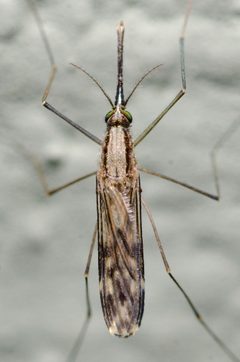
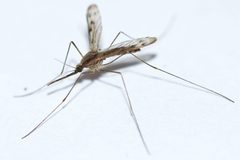
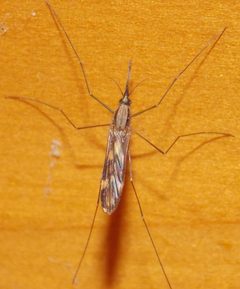
Anopheles mosquitoes are distinguished from other mosquito by several morphological features: palps as long as the ; discrete blocks of black and white on the wings; and a characteristic resting posture with the angled upward (-down position), unlike culicine mosquitoes which rest with bodies parallel to surfaces. Larvae lack the respiratory siphon present in other mosquito genera, instead positioning their bodies horizontally at the water surface to breathe through on the eighth abdominal segment.
Images
Habitat
Larval and pupal stages require aquatic including freshwater and saltwater marshes, mangrove swamps, rice fields, grassy ditches, stream and river edges, small temporary rain pools, ponds, water tanks, and tree holes or leaf axils of some plants. Most prefer clean, unpolluted water. can survive in dry regions such as savannas and the Sahel, sometimes traveling hundreds of kilometers by wind. Adults aestivate (enter dormancy) during hot dry weather to survive through dry seasons.
Distribution
Anopheles are distributed almost worldwide throughout tropical, subtropical, and temperate regions. Major concentrations occur in sub-Saharan Africa, where the most significant (including Anopheles gambiae and Anopheles funestus) are found. Species also occur across South and Central America, the Caribbean, Southeast Asia, and extend into temperate regions including historical presence in North America and Europe.
Seasonality
Activity patterns vary by and latitude. In temperate regions, abundance typically peaks in late summer with sharp declines in early fall. Some species emerge earlier in the season and increase steadily, while others emerge more slowly and peak before summer's end. In tropical regions, breeding and activity continue year-round with fluctuations tied to rainy seasons. can aestivate for months during hot dry periods.
Diet
of both sexes feed on nectar and other sugar sources for energy. Female Anopheles also require blood meals for development; blood is digested over 2–3 days in tropical conditions to provide protein for egg production. Larvae feed on , bacteria, and other microorganisms in the thin surface layer of water.
Life Cycle
Complete with four stages: , larva, pupa, and . Females lay 50–200 eggs per oviposition; eggs are laid singly on water with lateral floats, hatching within 2–3 days (up to 2–3 weeks in colder climates). Larvae pass through four instars over 5–14 days depending on and temperature, lacking a respiratory siphon and positioning horizontally at the water surface. Pupae are comma-shaped and must surface frequently to breathe through respiratory trumpets. Adults emerge from the surface of the after several days. Males typically live about one week; females can live over a month in captivity but usually 1–2 weeks in nature. Development from egg to adult can occur in as little as 5 days or take 10–14 days in tropical conditions.
Behavior
Most are or . Females exhibit varying degrees of anthropophily (preference for human blood) versus zoophily (preference for animal blood), with significant implications for transmission. Some species feed and rest indoors (endophagic and endophilic), others outdoors (exophagic and exophilic). Males form large swarms around dusk for mating. Females carrying Plasmodium show significantly increased attraction to human breath and odors. Third- and fourth-instar larvae of at least some species (e.g., Anopheles gambiae) exhibit , consuming and first-instar larvae of their own species.
Ecological Role
Anopheles serves as the obligate for Plasmodium that cause in humans, birds, and mammals. This makes the central to transmission dynamics of one of the world's most significant infectious . Larvae function as in aquatic . serve as prey for various including fish, amphibians, birds, bats, spiders, and other insects; the jumping spider Evarcha culicivora specifically targets Anopheles using their distinctive resting posture as a visual cue.
Human Relevance
Anopheles is the sole of mosquitoes capable of transmitting human , making it among the most medically important insect genera globally. Anopheles gambiae is the primary of Plasmodium falciparum, the most deadly malaria . Control efforts include -treated bed nets, indoor residual spraying, larval management, and attractive targeted sugar baits. Insecticide resistance has emerged as a major challenge, with some showing resistance to multiple insecticide classes. The 2023 detection of locally transmitted malaria in the United States after two decades highlights ongoing risk in areas where competent vectors persist. Gene drive systems and genetically engineered agents are under investigation.
Similar Taxa
- CulexBoth are mosquito in Culicidae, but Culex larvae possess a respiratory siphon and hang with bodies pointing downward from the water surface, while Anopheles larvae lack a siphon and rest horizontally. rest with bodies parallel to surfaces rather than angled upward, and Culex are not of human .
- AedesBoth are mosquito with medical importance, but Aedes typically have distinctive black and white markings, are active daytime biters, and transmit different (, , Zika, ) rather than . Aedes are to desiccation and laid above water lines, unlike Anopheles eggs which are laid directly on water.
Sources and further reading
- BugGuide
- Wikipedia
- GBIF taxonomy match
- iNaturalist taxon
- NCBI Taxonomy
- Catalogue of Life
- Anthony Cornel Knows Mosquitoes | Bug Squad
- There's a Genetic Component to the Host Choice of This Malaria Mosquito | Bug Squad
- Anopheles Mosquitoes as Vectors of Malaria in East Africa: Bed Nets and Beyond
- How One State's Mosquito Data Could Reduce Risk of Malaria Returning to U.S.
- Cannibalism in Mosquito Larvae Confounds Egg Counts
- The Sweetest Snack: Research Details Mosquitoes' Nectar Preferences
- Knockdown Resistance (kdr) Associated Organochlorine Resistance in Mosquito-Borne Diseases (Anopheles albimanus, Anopheles darlingi, Anopheles dirus and Anopheles punctipennis): A Systematic Review Study
- Characterization of larval habitats of Anopheles albimanus, Anopheles pseudopunctipennis, Anopheles punctimacula, and Anopheles oswaldoi s.l. populations in lowland and highland Ecuador