
Toxorhynchites
Theobald, 1901
elephant mosquitoes, mosquito eaters, giant treehole mosquitoes
Species Guides
1- Toxorhynchites rutilus(Elephant Mosquito)
Toxorhynchites is a of large, non-biting mosquitoes found in tropical and subtropical regions worldwide. are active during daylight hours and feed exclusively on nectar, honeydew, and plant juices rather than blood. The genus includes the largest known mosquito , reaching up to 18 mm in body length and 24 mm in wingspan. Larvae are obligate that consume other mosquito larvae and aquatic , making them valuable for of - mosquitoes.
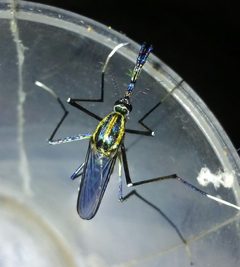
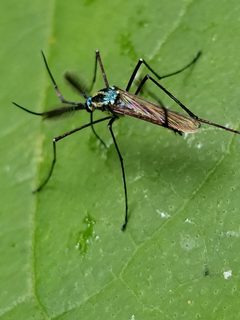
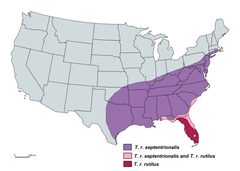
Pronunciation
How to pronounce Toxorhynchites: /tɒks.oʊ.raɪŋˈkaɪtiːz/
These audio files are automatically generated. While they are not always 100% accurate, they are a good starting point.
Identification
Distinguished from other mosquitoes by large size, activity, and curved . Males identified by tusk-like palps. Larvae recognized by predatory , reddish color, and short siphon. Non-biting confirmed by observing feeding on flowers or absence of blood-seeking activity. Separated from other large mosquitoes (Psorophora) by the curved proboscis and non- .
Images
Appearance
Large, robust mosquitoes with iridescent coloration in shades of blue, purple, green, or metallic hues. range from 7–18 mm in body length with wingspans up to 24 mm. The is long and strongly curved downward, adapted for nectar feeding rather than piercing. Males possess conspicuously upcurved palps resembling tusks. Long, slender legs extend well beyond the body. Larvae have reddish coloration, a broad black with strong hook-like , and a short anal siphon.
Habitat
Forest predominate, especially tropical and subtropical woodlands. Larval habitats include water-filled tree holes, bamboo internodes, leaf axils (including pitcher plants), and artificial containers such as flower pots, rain barrels, tires, and discarded vessels. frequent flowers and vegetation in shaded areas.
Distribution
in tropical and subtropical regions between approximately 35°N and 35°S latitude. Present in Central and South America, Africa, Asia, Australia, and Pacific islands. North American T. rutilus occurs from Texas and Oklahoma northeast to Pennsylvania, Connecticut, and Delaware. Introduced established in some regions for biocontrol purposes.
Seasonality
active year-round in tropical regions; in temperate zones, activity peaks in late summer and autumn. activity pattern with peak at dusk. T. rutilus in Kansas observed exclusively in late autumn.
Diet
feed on -rich materials: flower nectar, honeydew, fruit juices, and plant saps. Larvae are obligate consuming other mosquito larvae, aquatic insect larvae, and small aquatic . Individual larvae may consume up to 5,000 prey larvae before . on and larvae occurs, especially at high densities.
Life Cycle
Complete with four larval instars. are white or yellow, oval to football-shaped, and deposited singly or in small numbers while females hover over water surfaces. Incubation requires 40–60 hours depending on temperature. Larval development spans several weeks to six months, with duration influenced by food availability and temperature. occurs in the same aquatic . emerge and require nectar feeding for egg production; blood meals are unnecessary due to protein reserves accumulated during larval .
Behavior
activity with mating characterized by synchronized wing beats between males and females. Oviposition involves hovering flight with elliptical looping patterns while flinging onto water surfaces. Larvae are active that hunt visually, striking prey with sudden neck extension to launch the forward while spreading and sensory palps. Prey is seized with hook-like mandibles. is common when larvae are reared together.
Ecological Role
Top in container aquatic , regulating of other mosquito . of wildflowers through nectar feeding. Potential biocontrol agent for container-breeding including Aedes aegypti. Population declines in urban areas where vegetated is lost to development.
Human Relevance
Valued as agents against , Zika, , and . Mass rearing programs established in Japan, Southeast Asia, Caribbean, and United States. pose no biting nuisance or transmission risk. Misidentification as "mosquito hawks" or "crane flies" common; frequently subject to unnecessary killing due to mistaken identity as blood-feeding pests.
Similar Taxa
- PsorophoraAlso large, predatory mosquito larvae with similar harpoon-like strike , but are blood-feeding with straight piercing
- SabethesSome are facultative as larvae, but use tail-sweeping rather than extension; often have iridescent coloration but are blood-feeding
- CulexSuperficially similar body form, but are blood-feeding, larvae are filter-feeders not , and are laid in rafts
- Tipulidae (crane flies)Mistakenly called "mosquito hawks"; much larger, with extremely long fragile legs, non-predatory larvae, and do not feed significantly
Misconceptions
Frequently mistaken for blood-feeding mosquitoes and killed unnecessarily. The "mosquito eater" is misleading— do not consume other mosquitoes, only larvae do. Not related to crane flies (Tipulidae) despite superficial resemblance in size. Historical introductions for biocontrol sometimes involved misidentification (e.g., T. amboinensis introduced instead of intended T. splendens).
More Details
Biocontrol applications
Environmental scientists have proposed introducing Toxorhynchites outside native ranges to combat fever. Successful mass rearing requires individual larval rearing to prevent ; production of 1,000 weekly achieved in Texas programs. Larvae can be released at any life stage, including placed in target containers.
Evolutionary significance
The demonstrates evolutionary loss of blood-feeding in , with females obtaining sufficient protein for from larval rather than blood meals. This represents a rare dietary shift among mosquitoes.
Conservation status
T. rutilus declined in Harris County, Texas due to loss from urbanization, but partially recovered as landscaped yards and parks matured. Extinct T. mexicanus known from Miocene Mexican amber.
Sources and further reading
- BugGuide
- Wikipedia
- GBIF taxonomy match
- iNaturalist taxon
- NCBI Taxonomy
- Catalogue of Life
- Meet the Mosquito With a Big Appetite—for Other Mosquitoes
- Bug Eric: Fly Day Friday: The Good Mosquito
- Harpoon Heads, Sweeping Tails: How Predatory Mosquito Larvae Capture Prey
- Unique Egg-Laying Behavior Re-Discovered in Culex Mosquito Species
- The Best of 2022 on Entomology Today
- Entomologists Discuss Discovery's "Mosquito" Documentary: A Live-Tweet Recap
- Search Behavior Associated with Egg Cannibalism in Toxorhynchites amboinensis and Toxorhynchites rutilus rutilus (Diptera: Culicidae)
- Olfactory Cues for Oviposition Behavior inToxorhynchites moctezumaandToxorhynchites amboinensis(Diptera: Culicidae)
- New distribution records of Aedes aegypti (Linnaeus), Aedes mediovittatus (Coquillett), and Toxorhynchites portoricensis (Röder) (Diptera: Culicidae) in Puerto Rico and their relevance to integrated vector management.