
Dryoxylon onoharaense
(Murayama, 1933)
Dryoxylon onoharaense is a small ambrosia beetle (Scolytinae) in the weevil Curculionidae. Originally described from Japan, it has been introduced to North America and has established in the conterminous United States. Like other members of the tribe Xyleborini, it is presumed to cultivate ambrosia fungi in wood galleries for larval nutrition.

Pronunciation
How to pronounce Dryoxylon onoharaense: /draɪˈɒksɪlɒn oʊnoʊˈhɑːrəˌɛnsɛ/
These audio files are automatically generated. While they are not always 100% accurate, they are a good starting point.
Identification
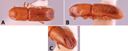
Distinguishing D. onoharaense from and other small xyleborine ambrosia beetles requires examination of subtle morphological characters, including pronotal and elytral setation patterns, declivital , and protibial . Identification to level generally necessitates examination and comparison with type or voucher specimens.
Images
Habitat
Associated with dead or dying woody vegetation; specific preferences are not well documented.
Distribution
Native to Southern Asia (including Japan); introduced and established in North America, specifically recorded from the conterminous 48 United States.
Diet
and larvae feed on ambrosia fungi cultivated within wood galleries; the fungus is inoculated and tended by the beetles. Direct wood consumption is minimal.
Life Cycle
As with other Xyleborini, is presumed to be through haplodiploid , with inbreeding sib-mating in natal galleries. Exact developmental parameters are not documented.
Behavior
Gallery construction occurs in wood, where fungal gardens are established and maintained. The exhibits the typical ambrosia beetle habit of carrying fungal spores in specialized cuticular structures (mycangia).
Ecological Role
Contributes to wood decomposition and nutrient cycling in forest ; as an introduced in North America, its ecological impacts relative to native xyleborines have not been assessed.
Human Relevance
Potential pest of timber and stored wood products; economic significance in North America is not established. May be transported in wood packaging materials, consistent with its intercontinental distribution pattern.
Similar Taxa
- Dryoxylon fici with overlapping distribution; separation requires detailed morphological comparison of declivital and pronotal characters.
- Xyleborinus saxeseniiSimilar small xyleborine with comparable size and habits; distinguished by differences in protibial and elytral declivity structure.
- Anisandrus disparAnother introduced Asian ambrosia beetle in North America; differs in pronotal shape and mycangial configuration.
More Details
Taxonomic History
Originally described as Xyleborus onoharaensis by Murayama in 1933 (or 1934, per NCBI), and later transferred to the Dryoxylon. The genus Dryoxylon was established to accommodate xyleborine with distinctive morphological and presumably biological characteristics separating them from Xyleborus sensu stricto.
Detection and Monitoring
Like other small scolytines, detection relies on trapping with ethanol-baited funnel traps or examination of wood . Given low iNaturalist observation count (4 records), the is likely underreported or underdetected in field surveys.