
Clytoleptus
Casey, 1912
Species Guides
1- Clytoleptus albofasciatus(Grape Trunk Borer)
Clytoleptus is a of longhorn beetles ( Cerambycidae) established by Casey in 1912. The genus contains a single , Clytoleptus albofasciatus. Members of this genus are recognized as mimics within the diverse North American cerambycid fauna, a trait shared with several related genera in the tribe Clytini.
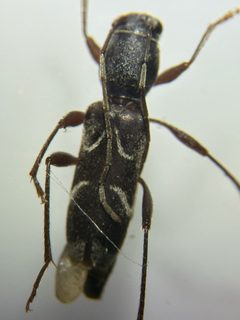
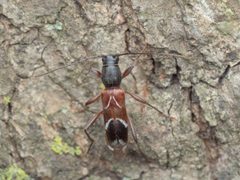
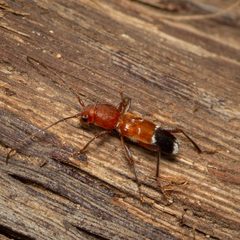
Pronunciation
How to pronounce Clytoleptus: /ˌklaɪtoʊˈlɛptəs/
These audio files are automatically generated. While they are not always 100% accurate, they are a good starting point.
Identification
The Clytoleptus is characterized by -mimetic , a trait used to distinguish it from non-mimetic cerambycid genera. As a member of the tribe Clytini, it likely shares the general elaphidiine body plan but with modifications suggesting mimicry of formicine ants. Specific diagnostic features for the genus relative to other ant-mimicking cerambycids (such as Euderces, Cyrtophorus, Tilloclytus, and Cyrtinus) are not documented in available sources.
Images
Distribution
North America. The single Clytoleptus albofasciatus has been recorded in northwestern Oklahoma, specifically at Alabaster Caverns State Park in Woodward County.
Seasonality
have been captured in late July in Oklahoma, suggesting summer activity.
Behavior
Has been observed as part of the -mimicry complex within Cerambycidae, where resemble ants in appearance and likely movement patterns. The effectiveness of this mimicry in deterring has been noted anecdotally for related ant-mimicking cerambycids.
Similar Taxa
- EudercesAnother cerambycid containing -mimicking ; historically included species now placed in other genera that also mimic ants.
- Cyrtophorus of -mimicking cerambycids in the same tribe Clytini, noted alongside Clytoleptus in discussions of North American ant-mimic diversity.
- Tilloclytus of small -mimicking cerambycids in tribe Clytini, similar in ecological role to Clytoleptus.
- Cyrtinus containing the notably small -mimic Cyrtinus pygmaeus, which occurs with small ants such as Lasius americanus; differs in diminutive size.
- Michthisoma with such as M. heterodoxum that mimic small Camponotus , representing another independent -mimicry lineage in Cerambycidae.
More Details
Taxonomic status
The is , containing only Clytoleptus albofasciatus. The was first captured in baited jug traps using ethanol and wine mixtures during a 2023 survey in Oklahoma.
Mimicry context
Clytoleptus was explicitly listed by Wheeler (1931) and subsequent authors as one of several North American cerambycid exhibiting mimicry, a defensive convergently evolved in multiple lineages.