
Clytoleptus albofasciatus
(Castelnau & Gory, 1841)
Grape Trunk Borer
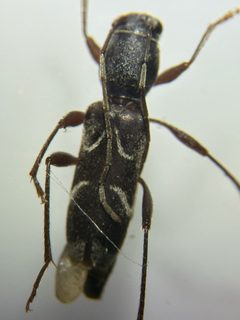
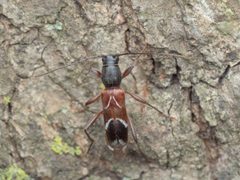
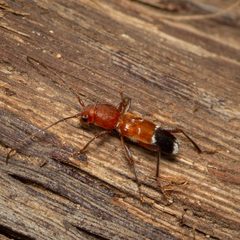
Clytoleptus albofasciatus is a longhorned beetle ( Cerambycidae) and the sole in the Clytoleptus. It is commonly known as the Grape Trunk Borer. The species has been documented in North America, with records from Ontario, Québec, and other Canadian provinces, as well as the United States. It has been captured in baited jug traps using ethanol and wine mixtures, suggesting attraction to fermenting volatiles.
Pronunciation
How to pronounce Clytoleptus albofasciatus: /ˌklaɪtoʊˈlɛptəs ˌælboʊfæsˈsiːeɪtəs/
These audio files are automatically generated. While they are not always 100% accurate, they are a good starting point.
Images
Distribution
North America. Documented records from Ontario and Québec, Canada; additional presence in the United States inferred from trapping studies in Oklahoma and Missouri. The has been collected in jug traps baited with ethanol and wine mixtures in northwestern Oklahoma (Woodward County) and was previously recorded from southern Missouri.
Seasonality
activity has been documented in July, based on capture records from jug trap servicing runs in northwestern Oklahoma on 25 July 2023.
Host Associations
- Vitis - larval 'Grape Trunk Borer' implies association with grape (Vitis), though specific documentation of this relationship is not provided in available sources.
Behavior
are attracted to fermenting volatiles. Has been captured in jug traps baited with sweet red wine, pure ethanol, and 50:50 mixtures of ethanol and sweet red wine.
Human Relevance
The 'Grape Trunk Borer' suggests potential economic significance as a pest of grapevines, though specific damage documentation is not provided in available sources.
More Details
Nomenclatural note
Authority cited as (Castelnau & Gory, 1841) in most sources, though NCBI lists (Laporte & Gory, 1835) as authority with basionym Chlorophorus albofasciatus. The Clytoleptus is , containing only C. albofasciatus.
Trapping methodology
Specimens have been collected using 'jug traps'—1-gallon milk jugs with entry windows, baited with ethanol, wine, or mixtures, with propylene glycol as killing agent and preservative.